Wednesday, January 12, 2011
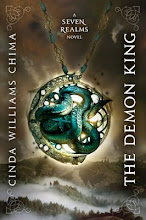
The Demon King Named to YALSA'S Best Fiction for Young Adults 2011!


Monday, January 10, 2011
Finding Magic in Unexpected Places
You know that I am a sucker for magic. But magic can be conjured in many different ways, and found in the most unexpected places—sometimes between the covers of a book, and sometimes in real life when somebody says or does something brilliant and unexpected.
And sometimes you find it in places where magic should be but is rarely found.
My son sent me this link to a blog post by sports writer (emphasis on “writer”) Joe Posnanski about taking his daughters to The Wizarding World of Harry Potter. I’ve not been to the WWHP-- I almost got to go there a few weeks ago when I was in Orlando for NCTE. But it didn’t work out. And now I find out that there really is magic there and I missed it. But read it for yourself.

Posnanski’s story reminds me of the time my husband and I took our young sons to Disney World. First, it was brutally hot, and then it began pouring down rain and then Eric threw up (a common response to excitement at that time.) We tried to figure out how to salvage something from an awful day. So my husband sat with Eric in the picnic shelter and held him while he slept. Keith and I walked out in our yellow Mickey rain slickers to watch the parade.
The rain had thinned the crowd, and so, for once, we stood right in front where we could see. We heard the drums and the music and the parade flowed toward us like a ribbon of color through the midsummer dusk. We stood there holding hands while the parade marched by, like vinyl-clad refugees from a damp disaster. The mist rolled up from the hot pavement like magic and we held hands and I cried then, too.
Tuesday, January 4, 2011

Monday, January 3, 2011
Audio Book News
The Demon King Shortlisted for
ALSC Notable Recordings List
The Demon King audio book (from Recorded Books, narrated by Carol Monda) has been nominated for the Association for Library Services for Children’s Notable Recordings list. The final selection will be made at the ALA midwinter meeting in San Diego January 7.

For more info visit http://www.alsc.ala.org/blog/?p=1938.
The Exiled Queen Audiobook Coming 1.23.11

In response to several queries, The Exiled Queen audiobook, also narrated by Ms. Monda, is set for release January 23, 2011.
Sunday, December 19, 2010
On Plot
Young Writer Writes:
I’m in eighth grade, and I’m supposed to write a 50,000-word novel for English class, and I’m having trouble coming up with a plot. Do you have any advice?
Dear Young Writer: Whoa, the bar’s been raised since I was your age. I had to write four-paragraph persuasive essays. Of course, sticking to four paras isn’t easy for a fantasy writer.
Well, you know I’m not going to hand you a plot line, because writing is difficult enough without having to write somebody else’s story. But I will give you some advice.
1. Writers get ideas from their own experiences. We are all constantly collecting experiences that can be used in story. There are lots and lots of writing prompts out there that can stimulate story.
2. Many writers are stopped by the notion that they have to have everything figured out before they begin. If you’ve read my Plungers vs. Plotters post, you know that I don’t outline ahead or time, though I do have a rather loose framework. The writing process spawns story.
3. If you do your work with character, plot comes naturally. Every story starts with a character, her desires, and the obstacles in the way. That’s where conflict comes from. If you do your work with character up front, plot will follow. Your job as a writer will be easier.
4. Once you have a character and her desires and obstacles, think how you can make matters worse. At the opening of the Harry Potter novels, Harry’s biggest problem is those nasty Dursleys. But soon, more and more problems are piling on. Fantasy is especially good for that. Not only does Buffy the Vampire Slayer have to navigate the minefield of high school, she’s living on the Hellmouth.
5. While writing a first draft, stay open to serendipity, to new ideas, even if you do outline ahead of time. As you write, connections and complications will surface that you didn’t anticipate. Don’t be afraid to go with them, and clean up after. That’s why writing in the computer age is so much easier than, say, woodworking. It’s a lot easier to undo and redo.
6. I’ve said this before, but I’ll say it again—the first draft is where you lay the framework of plot. In order to do that, turn off the editor in your head. I have writer friends who will put a note in the middle of a chapter—WRITE AN AWESOME DESCRIPTION HERE or SHOW HOW NASTY TABITHA IS or GET THEM BACK TO SCHOOL SOMEHOW. Don’t lose momentum by figuring out every detail.
7. Hopefully, these guidelines will help you finish a first draft. But understand that a first draft is just a start. Just because you’re done doesn’t mean you’re done. Learn to love revision.
Friday, December 10, 2010
Road Warrior Redux
Some long-time readers may remember my post about spending the night in what I called the American Airlines Holiday Inn (a baggage cart in LaGuardia Airport.)
This week, I flew to New York City for a memorial service for literary agent Ralph Vicinanza. When I booked my flight, a direct flight to NYC would have cost $750. A flight that connected through Philadelphia cost $250.
Not a difficult decision, based on cost, but, still, I hesitated. I knew if I booked a connecting flight to the east coast in December, I would live to regret it. But I did it anyway.
When I flew out of Cleveland, it was snowing like crazy, the local phenomenon we call “lake effect.” After serious de-icing, the plane still took off almost on time. We know to expect snow in December in Cleveland.
All went well until the return trip. I was at (you guessed it) LaGuardia Airport, this time flying U.S. Airlines. Mind you, there was no bad weather at LaGuardia, or in Philadelphia, where I was headed for my connection. But there were delays and cancellations all over the flight board.

How You Know You're Not Gonna Fly
First, we had no plane. So they switched me to a flight that had a plane. Then we sat on the runway forever because of air traffic, making us late enough to endanger my connection. As we deplaned in Philadelphia, they handed us boarding passes for rebooked flights the next morning—just in case we missed the flight to Cleveland.
That should have been a clue. Still, three of us heading for Cleveland raced to take the shuttle bus to the next terminal. We arrived at our gate all in a lather, only to find the gate deserted. Our plane had just left.
Together with another passenger named Sue, I headed for the US Air service center, hoping we could still get out that night on another airline. The genial man at the service counter said, “Oh, no, all the airlines stop flying at the same time. There’s no more flights tonight.”
“Well, then,” I said, not looking forward to another night on the floor, “Could you put us up for the night? I mean, this isn’t our fault.”
“Depends on the reason for the delay,” he said, clicking through screens on the computer. “Nope,” he said, shaking his head mournfully. “The delay was due to air traffic. We don’t pay for air traffic delays.”
I don’t get that. If there’s too many planes in the air at once, the airlines put them there. They schedule so tightly at hubs on the east coast that any minor perturbation throws the schedule into a tailspin. Figuratively speaking.
Just as he got done explaining this, Sue began to cry. She had children to get to school the next morning, she didn’t know who was going to be able to pick her up at the airport, and, clearly, she didn’t want to spend one more minute in Philadelphia.
I could totally relate. I cry when I’m angry and frustrated, too.
As Sue went to get a tissue, the supervisor at the next terminal asked, looking worried, “Is she going to be all right?”
“I don’t know,” I said, shaking my head. “We just met.” My expression said, She looks awfully fragile to me.
The supervisor turned to the clerk. “Give them a voucher,” she said abruptly.
“What?” he said. “But…”
“Give them a voucher,” she repeated, turning back to her screen.
And so it was that I stayed in the U.S. Airlines Ramada Inn. And slept in a bed.
Thank you, Sue. And thanks to that supervisor.
Saturday, December 4, 2010
So You Want to Find A Publisher
Young Writer Writes: I would like to try to get my books published eventually and so was wondering does it cost anything to publish a book? Do you need to get your own editor or does the company provide one?
Young Writer,
Cool that you're making plans for publication. The very first thing to do is to make sure your manuscript is as strong as it possibly can be. Many writers (including me, at the beginning) tend to rush to the business of publication before their manuscripts are really ready. Many writers write several novels before they write one that is ready for publication.
Most successful writers revise numerous times and also submit their work for critique so that other readers can read it and offer suggestions. Those readers will usually be other writers.
You’ll find posts on finding critique partners here. http://cindachima.livejournal.com/tag/critique
You may find a number of other posts on my blog helpful, including this one called "What to Do with That Diamond in the Rough."
To read all my writing-related posts, go to my LiveJournal and use the tag, Young Writer Q&A. You'll find my writing-related posts here. http://cindachima.livejournal.com/tag/young%20writer%20q%20%26%20a
On my website, follow this link
and read all of the documents on there, including Getting Started in Writing, which has many links to useful information.
In my opinion, anyone who is seeking to publish a novel will benefit from having representation from a literary agent. A literary agent sells your work to publishers and collects a commission of 15% for domestic sales and 20% for overseas sales. Many publishers—my own included—accept submissions only from literary agents. Without an agent, you will be shut off from the largest publishers.
Finding an agent isn’t easy, though. I have a number of posts on my website relating to finding an agent.
To answer your question, a commercial or traditional publisher does not charge to publish your book and will provide an editor for you. A commercial publisher is one who makes money through selling your books through an established distribution network. Remember--money flows from the publisher to the writer and not the other way around.
Some people are choosing to self-publish these days; in that case you pay the cost of publishing your book. There are many new ways to self-publish, including digital editions that do not cost much to make available online.
However, because anybody can self-publish a book, many of the books published are of very poor quality. Even if your book is great, it can be difficult for readers to find it. While there are notable exceptions, most self-published books never sell more than a few hundred copies, mostly to family and friends.
There are a few situations in which self-publishing makes sense, e.g. in some non-fiction categories, or where you have a "platform" or opportunity to promote your books.
For example, let's say you travel the country teaching seminars on making money in publishing. You might self-publish a handbook and sell it at your seminars. Otherwise, I still think it's best to pursue commercial or traditional publishing, especially for fiction.
Subscribe to:
Posts (Atom)