Tuesday, January 4, 2011


Monday, January 3, 2011
Audio Book News
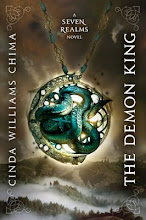
The Demon King Shortlisted for
ALSC Notable Recordings List
The Demon King audio book (from Recorded Books, narrated by Carol Monda) has been nominated for the Association for Library Services for Children’s Notable Recordings list. The final selection will be made at the ALA midwinter meeting in San Diego January 7.

For more info visit http://www.alsc.ala.org/blog/?p=1938.
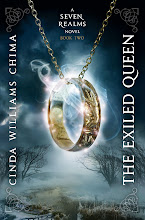
The Exiled Queen Audiobook Coming 1.23.11

In response to several queries, The Exiled Queen audiobook, also narrated by Ms. Monda, is set for release January 23, 2011.
Sunday, December 19, 2010
On Plot
Young Writer Writes:
I’m in eighth grade, and I’m supposed to write a 50,000-word novel for English class, and I’m having trouble coming up with a plot. Do you have any advice?
Dear Young Writer: Whoa, the bar’s been raised since I was your age. I had to write four-paragraph persuasive essays. Of course, sticking to four paras isn’t easy for a fantasy writer.
Well, you know I’m not going to hand you a plot line, because writing is difficult enough without having to write somebody else’s story. But I will give you some advice.
1. Writers get ideas from their own experiences. We are all constantly collecting experiences that can be used in story. There are lots and lots of writing prompts out there that can stimulate story.
2. Many writers are stopped by the notion that they have to have everything figured out before they begin. If you’ve read my Plungers vs. Plotters post, you know that I don’t outline ahead or time, though I do have a rather loose framework. The writing process spawns story.
3. If you do your work with character, plot comes naturally. Every story starts with a character, her desires, and the obstacles in the way. That’s where conflict comes from. If you do your work with character up front, plot will follow. Your job as a writer will be easier.
4. Once you have a character and her desires and obstacles, think how you can make matters worse. At the opening of the Harry Potter novels, Harry’s biggest problem is those nasty Dursleys. But soon, more and more problems are piling on. Fantasy is especially good for that. Not only does Buffy the Vampire Slayer have to navigate the minefield of high school, she’s living on the Hellmouth.
5. While writing a first draft, stay open to serendipity, to new ideas, even if you do outline ahead of time. As you write, connections and complications will surface that you didn’t anticipate. Don’t be afraid to go with them, and clean up after. That’s why writing in the computer age is so much easier than, say, woodworking. It’s a lot easier to undo and redo.
6. I’ve said this before, but I’ll say it again—the first draft is where you lay the framework of plot. In order to do that, turn off the editor in your head. I have writer friends who will put a note in the middle of a chapter—WRITE AN AWESOME DESCRIPTION HERE or SHOW HOW NASTY TABITHA IS or GET THEM BACK TO SCHOOL SOMEHOW. Don’t lose momentum by figuring out every detail.
7. Hopefully, these guidelines will help you finish a first draft. But understand that a first draft is just a start. Just because you’re done doesn’t mean you’re done. Learn to love revision.
Friday, December 10, 2010
Road Warrior Redux
Some long-time readers may remember my post about spending the night in what I called the American Airlines Holiday Inn (a baggage cart in LaGuardia Airport.)
This week, I flew to New York City for a memorial service for literary agent Ralph Vicinanza. When I booked my flight, a direct flight to NYC would have cost $750. A flight that connected through Philadelphia cost $250.
Not a difficult decision, based on cost, but, still, I hesitated. I knew if I booked a connecting flight to the east coast in December, I would live to regret it. But I did it anyway.
When I flew out of Cleveland, it was snowing like crazy, the local phenomenon we call “lake effect.” After serious de-icing, the plane still took off almost on time. We know to expect snow in December in Cleveland.
All went well until the return trip. I was at (you guessed it) LaGuardia Airport, this time flying U.S. Airlines. Mind you, there was no bad weather at LaGuardia, or in Philadelphia, where I was headed for my connection. But there were delays and cancellations all over the flight board.

How You Know You're Not Gonna Fly
First, we had no plane. So they switched me to a flight that had a plane. Then we sat on the runway forever because of air traffic, making us late enough to endanger my connection. As we deplaned in Philadelphia, they handed us boarding passes for rebooked flights the next morning—just in case we missed the flight to Cleveland.
That should have been a clue. Still, three of us heading for Cleveland raced to take the shuttle bus to the next terminal. We arrived at our gate all in a lather, only to find the gate deserted. Our plane had just left.
Together with another passenger named Sue, I headed for the US Air service center, hoping we could still get out that night on another airline. The genial man at the service counter said, “Oh, no, all the airlines stop flying at the same time. There’s no more flights tonight.”
“Well, then,” I said, not looking forward to another night on the floor, “Could you put us up for the night? I mean, this isn’t our fault.”
“Depends on the reason for the delay,” he said, clicking through screens on the computer. “Nope,” he said, shaking his head mournfully. “The delay was due to air traffic. We don’t pay for air traffic delays.”
I don’t get that. If there’s too many planes in the air at once, the airlines put them there. They schedule so tightly at hubs on the east coast that any minor perturbation throws the schedule into a tailspin. Figuratively speaking.
Just as he got done explaining this, Sue began to cry. She had children to get to school the next morning, she didn’t know who was going to be able to pick her up at the airport, and, clearly, she didn’t want to spend one more minute in Philadelphia.
I could totally relate. I cry when I’m angry and frustrated, too.
As Sue went to get a tissue, the supervisor at the next terminal asked, looking worried, “Is she going to be all right?”
“I don’t know,” I said, shaking my head. “We just met.” My expression said, She looks awfully fragile to me.
The supervisor turned to the clerk. “Give them a voucher,” she said abruptly.
“What?” he said. “But…”
“Give them a voucher,” she repeated, turning back to her screen.
And so it was that I stayed in the U.S. Airlines Ramada Inn. And slept in a bed.
Thank you, Sue. And thanks to that supervisor.
Saturday, December 4, 2010
So You Want to Find A Publisher
Young Writer Writes: I would like to try to get my books published eventually and so was wondering does it cost anything to publish a book? Do you need to get your own editor or does the company provide one?
Young Writer,
Cool that you're making plans for publication. The very first thing to do is to make sure your manuscript is as strong as it possibly can be. Many writers (including me, at the beginning) tend to rush to the business of publication before their manuscripts are really ready. Many writers write several novels before they write one that is ready for publication.
Most successful writers revise numerous times and also submit their work for critique so that other readers can read it and offer suggestions. Those readers will usually be other writers.
You’ll find posts on finding critique partners here. http://cindachima.livejournal.com/tag/critique
You may find a number of other posts on my blog helpful, including this one called "What to Do with That Diamond in the Rough."
To read all my writing-related posts, go to my LiveJournal and use the tag, Young Writer Q&A. You'll find my writing-related posts here. http://cindachima.livejournal.com/tag/young%20writer%20q%20%26%20a
On my website, follow this link
and read all of the documents on there, including Getting Started in Writing, which has many links to useful information.
In my opinion, anyone who is seeking to publish a novel will benefit from having representation from a literary agent. A literary agent sells your work to publishers and collects a commission of 15% for domestic sales and 20% for overseas sales. Many publishers—my own included—accept submissions only from literary agents. Without an agent, you will be shut off from the largest publishers.
Finding an agent isn’t easy, though. I have a number of posts on my website relating to finding an agent.
To answer your question, a commercial or traditional publisher does not charge to publish your book and will provide an editor for you. A commercial publisher is one who makes money through selling your books through an established distribution network. Remember--money flows from the publisher to the writer and not the other way around.
Some people are choosing to self-publish these days; in that case you pay the cost of publishing your book. There are many new ways to self-publish, including digital editions that do not cost much to make available online.
However, because anybody can self-publish a book, many of the books published are of very poor quality. Even if your book is great, it can be difficult for readers to find it. While there are notable exceptions, most self-published books never sell more than a few hundred copies, mostly to family and friends.
There are a few situations in which self-publishing makes sense, e.g. in some non-fiction categories, or where you have a "platform" or opportunity to promote your books.
For example, let's say you travel the country teaching seminars on making money in publishing. You might self-publish a handbook and sell it at your seminars. Otherwise, I still think it's best to pursue commercial or traditional publishing, especially for fiction.
Monday, November 29, 2010
A New Setting
We’ve been house-hunting these past few months. If you ask us why, we’ll tell you it’s because our sons have graduated high school and we don’t need to stay in the same school district. We’ll tell you that our needs have changed. In truth, it’s a combination of a desire to try something new, a fear of waiting too long, and the fact that our last move was more than twenty years ago. Apparently it takes that long for the trauma to fade.
Still, we lack the stamina to move far away. It requires too much decision-making, too much risk-taking, and besides, I like the Midwest--most of the time. I understand it.
Moving across the river seems doable.
We’ve kept it kind of quiet. Those we’ve told have responded with variations on amused skepticism and frank disbelief. I mean, we’re living in a perfectly adequate house. I come from people who stay put unless they’re run out of town.
“If you move, where will I play tennis?” my son asks—the 25-year-old who lives four states away. These days he plays at our neighborhood courts once or twice a year. But I understand. This is his childhood home—the only home he remembers. This is where his story began.
House-hunting is like having this obsessive part-time job that you know is going to cost you money. I discover that my husband and I have absolutely nothing in common when it comes to what we want in a house. We make dual (dueling?) lists of essential features, knowing that no one house will ever meet this long list of demands.
Not a house we can afford, anyway.
We begin with a budget, but soon we’re saying things like, “For only $50,000 more, we could buy that house with the media room.” Even though we know we’ll never set foot in it. Once we’ve made the mistake of looking at homes that are out of our price range, the houses we can actually afford begin to look a little cramped, a little plain, a little frayed around the edges.
Our old home is like a comfortable pair of shoes—well broken-in. We never noticed its genteel decline—we were participants, after all. The decorating may not be au courant, but it is of our own choosing. In the homes we’re looking at, we see that the cabinets are dated, the carpet is stained, and the counters are topped with Formica instead of granite. Or, if we don’t see it, our realtor points it out. “At this price point, I expect hardwood and granite,” she says.
Sometimes, I walk into a house, and feel like an intruder. I cannot see myself living there, no matter how fancy it is. Or maybe because of how fancy it is. I don’t want to feel insignificant in my own house, like I have to dress up to get out of bed.
Other homes immediately capture my heart. I imagine looking out at the world through those windows. I envision carrying my coffee onto that screened porch and flopping into the swing. I see gardens where the grass grows now. I spin madly around that kitchen, preparing supper on Christmas Eve.
I begin to write stories.

A few weeks ago, we walked into a house in the historic district of a small town. It was more money than we wanted to pay. It lacked many of the features we were looking for—the spacious workshop, the sunroom, the acres of privacy, the attached garage. Other houses were snugged in on either side.
And yet, I was smitten. That house spoke to me. It had a large, fenced in backyard—I could see flower gardens against that fence—hollyhocks and gladioli and hydrangeas. It had a beautiful kitchen, a lovely side porch and a finished third floor, which I loved, despite the sloping walls. There was a large office with windows on two sides, and it was walking distance to the library, the bookstore, the ice cream shop, and the waterfall in the park downtown.
And in the second floor hallway, there was a sign on the wall—Home is where your story begins.
We bought the house. And so, our story goes forward from there.
Sunday, November 7, 2010
Why I Write Fantasy Fiction
Why I Write Fantasy Fiction
I don’t know which is worse in the eyes of some readers and writers of SERIOUS BOOKS—writing fantasy fiction, or writing for teens. In the tone of voice an adult might use when admiring a two-year-old’s childish drawing, they say, “Keep at it, and maybe one day you’ll get to write a real book.”
I’ve previously discussed being dissed as a writer of fantasy fiction by the literati. I’ve also explained why I write for teens.
Truth be told, writers don’t need to seek out more opportunities for humiliation—our lives are humbling enough as is. So why write fantasy?
1. The easy answer is that fantasy sells, and has been selling for years, especially to young readers. On a recent New York Times bestseller list (October 1, 2010) eight of ten bestselling chapter books and five of ten bestselling series books were fantasy novels of one kind or another. Fantasy these days is such a broad genre that there’s room for a broad range of readers and writers.
That said, I think it’s a mistake to follow trends. Writing a novel is difficult enough if you like what you’re writing. I think readers can tell when you’re just going through the motions. So, keep an eye on the market but write from the heart. Not every genre suits me, but fantasy does. Therefore I write it. That’s not to say I always will.
2. Fantasy expands options when it comes to plot and conflict. The element of magic is one more weapon in the writer’s arsenal. Not only is Buffy the Vampire Slayer forced to navigate the social minefield of high school—but there’s a hell-hole under the cafeteria.
In The Demon King, Han Alister is an orphaned streetgang leader who’s being hunted for murders he didn’t commit. Also, he’s carrying a magical amulet that could destroy him.

Princess Raisa ana’Marianna stands to inherit a political snakepit of a queendom from her mother the queen—if she can manage to hold off a rebellion of powerful wizards desperate to regain power.
In The Warrior Heir, Jack Swift is a high school student whose girlfriend just broke up with him. The principal hates him and he’s worried he won’t make the soccer team. Also, two powerful wizard houses are hunting him, meaning to play him in a deadly magical tournament.
Alternative worlds expand options as well. The Seven Realms series takes place in a quasi-medieval world. In medieval times, sixteen-year-olds were adults, for all intents and purposes. And so, as a writer, I can put my teenage characters into dire and dangerous situations; I can shovel heavy responsibility onto their shoulders and send them out on the road without worrying about Children’s Protective Services.
3. Fantasy provides a forum in which to explore Big Ideas in a safe place. I don’t mean safe for the characters—I mean safe for the reader. Long ago and/or far away provides a certain distance. It’s clearly a created world, even if I manage to entice the reader into it.
In the Queendom of the Fells, I can address environmental and gender issues without the distractions of contemporary politics. I can explore revisionist history without pointing any fingers. I can put the conflict between good and evil into stark relief in an ecumenical way.
Fantasy can free the reader of pre-conceived notions, expectations, and biases and allow them to experience a different sensibility—new ways of looking at the world.
4. All fiction provides escape from real life, if only briefly. The reader chooses the escape that suits him or her best. A gritty contemporary novel may not offer escape from a gritty contemporary world. Fantasy does.
5. Finally, and perhaps most important, fantasy is fun. In a world that seems bent on the destruction of pleasure reading, fantasy satisfies.
Subscribe to:
Posts (Atom)