“They want me to ‘Lexile the library,’” she said. “I’m fighting it.”
“Lexile the library? What’s that?” I said.
Turns out Lexile is a scoring system used to evaluate the reading difficulty of books based on word frequency and sentence length. The idea is that if you know a book’s reading level, and you know the reading ability of a student, you can direct them to appropriate books. Nothing wrong with that, right?
“They want me to paste the Lexile rating on the spine of each book,” my friend said. “Then the language arts teacher sends students in to check out books for pleasure reading. He tells them they have to be in a certain Lexile range. I’m the one that hears the complaints. They don’t want to read any of those books.”
Hmm, I thought. That’s an odd way to choose books for pleasure reading.
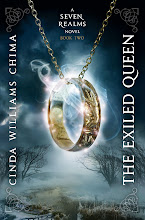
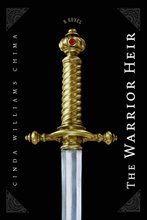
“Plus the ratings don’t even offer good direction,” she said. “Take your books. The Lexile level for The Warrior Heir (L730) is higher than for The Dragon Heir (L710). Does that make sense?”
Intuitively, it didn’t. The Warrior Heir is a straightforward hero’s tale. The Dragon Heir is layered, nuanced, darker and more complex with multiple viewpoints. Also fifty pages longer. My younger readers tend to prefer The Warrior Heir. But I guess it must have longer sentences or harder words than The Dragon Heir.
Then I did an author visit at a school. During the question and answer period a teacher raised his hand and asked me, “When you’re writing your books, are you aiming for a particular Lexile level?”
I stared at him, feeling a shiver of apprehension. “You mean I have to do that, too?” I blurted.
As if it’s not hard enough to write books that teens want to read, that parents approve of, that your publisher will buy, and that you can be proud of.
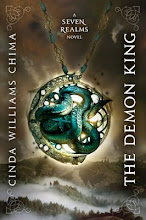
Then I happened to be looking on the Barnes & Noble site. There, on the page for my newest book, The Demon King, was this entry: Reading Level from Lexile: 760L
Huh?
Barnes & Noble has made its site searchable for Lexile levels.
I was beginning to feel like I was the viewpoint character in a dystopian novel.
I ranted about this to my husband. He rolled his eyes and said, “I feel a blog coming on.”
Um, no, I don’t think about Lexiles when I write. My job as a writer is to tell a story in the most effective way. It means I try to choose the best, most vivid words and a sentence structure appropriate to the on-stage action. I’m thinking good writing--spare, streamlined, and clear—will tend to have a lower Lexile.
I went online, and discovered a whole Lexile world out there. There’s a Find a Book feature on the Lexile website where you can search for a book in a certain Lexile Range. There are success stories of schools that “Lexiled their library.” One company says on its website that its software can allow the librarian to see whether the book a student wants to check out is at the correct reading level. If not, the librarian can direct students to appropriate books. That way, the librarian can “play a big role in improving student reading and essential growth and achievement.”
Wow, finally! That would have to be so rewarding, being the book police.
Not only that, the software “keeps a Lexile history for each student, and their progress is trackable and, more importantly, reportable.”
Does anybody else find this disturbing?
It’s not the system itself, but how it’s being used that worries me.