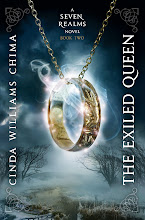
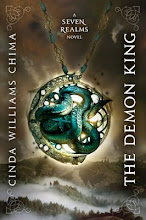
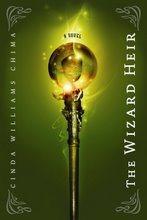
In my previous post, I expressed misgivings about using Lexiles to select books for pleasure reading for middle and high schoolers.
I appreciate all the thoughtful comments from people who are more expert than me in reading and library science. Thank you!! Librarians and teachers: you are my people!!
Before I let this topic go (my heavens, a 2-blog rant!) I thought I would try using the search program on the Lexile website to find books within a particular Lexile range that I might like to read. I used the grade level ranges, though I understand that standardized testing generates a Lexile level for individual students.
Let’s say I’m a 10th grader, and I find books at my grade level easy to read. That translates into a Lexile of 1155 to 1390, according to the website. I narrow my search to fantasy juvenile fiction, ages 14 and up, because that’s what I like. The result: a total of six books. Out of a huge database. They seem oddly young, too—not high interest for 10th graders. The ages ranges on the specific books are 7 and up, 8 and up, 10 and up. Examples include Tales of Beedle the Bard, Wizardology, and Arthur Spiderwick’s Field Guide.
If I search general (not juvenile) fantasy fiction, I get eight books: two H.G. Wells, one Arthur Conan Doyle, a 1983 science fiction book by James Hogan, a science fiction textbook, a fantasy textbook, an Arthurian tale, and one R.A. Salvatore Forgotten Realms series fantasy novel from 1993. Mostly science fiction, and nothing contemporary at all. It seems like the older the book, the higher the Lexile level.
Well, maybe it doesn’t work so well for high school. How about middle school?
OK, I’m a seventh grader with a high reading level (Lexile of 1040-1270.) That would be my own target reading audience. Again, I search for juvenile fantasy fiction, age 12 and up. We’re doing better. We turn up 32 books this time. And some of them have been popular with teens who self-select (Brisingr, Blue Moon, Sabriel, Chalice, Princess Ben.) But the list also includes three old Wizard of Oz books, H.G. Wells’s Time Machine, and some that look like picture books. And there is no guarantee how many of these books are going to be in a given library, or appeal to an individual reader who, say, likes urban fantasy. Fantasy is a broad genre, and this is pretty limiting.
Hmm, I think. Let’s take a different approach. I’ll look for books in a similar Lexile range to my latest book, The Demon King. Now The Demon King is 512 pages, a complex high fantasy with multiple character viewpoints aimed at ages 12 and up. It has a Lexile level of 760. Oops. According to the Lexile website, that’s equivalent to a fourth grade reading level.
This is the same book that is being published as adult fiction in several countries overseas.
Let’s see what else is in this range (660-810L), ages 10 and up.
Wow. I have a lot of competition for those fourth grade fantasy readers. I get 692 books! There’s lots of good stuff here. Tamora Pierce’s fantasy novels, Jonathan Stroud’s Bartimaeus series, Suzanne Collins’s phenomenally best-selling The Hunger Games. More best-sellers include Rick Riordan’s Lightning Thief series, Scott Westerfeld’s Uglies trilogy, Cassandra Clare’s Mortal Instruments series, Kammi Garcia’s Beautiful Creatures and Maggie Stiefvater’s Shiver, Libba Bray’s A Great and Terrible Beauty series. Also, of course, the Twilight series, and all four of my YA novels.
There are award-winners like the Newbery winning The Giver, Cornelia Funke’s Inkheart series, Jeanne DePrau’s City of Ember, Gail Carson Levine’s Ella, Enchanted, and the Best Books for Young Adults 2010 top-tenners The Demon’s Lexicon and The Reformed Vampire Support Group.
Hmmm. Here are Annette Curtis Klause’s Blood and Chocolate (ages 14-17), Neal Schusterman’s Unwind (ages 13-17) Kristin Cashore’s popular and award-winning Graceling and Fire (ages 14 and up). Some a little edgy for that high level fourth grade child.
But, keep in mind, based on Lexile level, none of these books would be offered to a high-reading level 7th grader. They wouldn’t be “hard” enough.
By the way, some picture books, including Where the Wild Things Are, by Maurice Sendak (740L) are in the same range. It’s actually at a higher Lexile level than my novel, The Wizard Heir (690L), which is 458 pages long. Who knew? And, Young Merlin, 25 pages long, for ages 4-8, is also ranked more difficult than The Wizard Heir based on Lexile.
Anyway, when it comes to pleasure reading, I’m going back to fourth grade, I guess.
OK, I’m having fun here. And I admit: it’s possible I messed up somehow, though I believe I used the search function the way any parent or child would to find a book. My point is this: it would be cool to match readers to books they could successfully read. But as soon as you develop a score, rating, numerical evaluation of something, it takes on a life of its own. People begin to misuse it, even though the developers of the system have disclaimers on the website about responsible use, considering content, etc.
Plus, I shouldn’t have to tell you this, but just because something is difficult to read doesn’t mean it’s worth reading.
Even when it comes to reading level, a formula based on difficulty, e.g. strictly sentence length and word frequency, seems limited. Also in play are the length of the book, the complexity of the story, the metaphors and imagery used, the theme, the content, the subject matter, and the pacing. I would argue that a 458-page novel is more challenging to read than a picture book, and more suited to a high level reader. I don’t care about the length of the sentences.
I freely admit, I’m no expert, just a reader and a writer and a parent. But as someone with a vested interest in nurturing pleasure readers, I’d rather have a librarian or teacher talk to the student, find out what they’re interested in, what else they like to read, and direct them on that basis. If the book is too challenging, it will take about a minute for the kid to figure it out. Trust them.
And the last thing I’d want to do is take a book out of a kid’s hands that he or she wants to read, because it’s not hard enough.