Monday, November 29, 2010

A New Setting


We’ve been house-hunting these past few months. If you ask us why, we’ll tell you it’s because our sons have graduated high school and we don’t need to stay in the same school district. We’ll tell you that our needs have changed. In truth, it’s a combination of a desire to try something new, a fear of waiting too long, and the fact that our last move was more than twenty years ago. Apparently it takes that long for the trauma to fade.
Still, we lack the stamina to move far away. It requires too much decision-making, too much risk-taking, and besides, I like the Midwest--most of the time. I understand it.
Moving across the river seems doable.
We’ve kept it kind of quiet. Those we’ve told have responded with variations on amused skepticism and frank disbelief. I mean, we’re living in a perfectly adequate house. I come from people who stay put unless they’re run out of town.
“If you move, where will I play tennis?” my son asks—the 25-year-old who lives four states away. These days he plays at our neighborhood courts once or twice a year. But I understand. This is his childhood home—the only home he remembers. This is where his story began.
House-hunting is like having this obsessive part-time job that you know is going to cost you money. I discover that my husband and I have absolutely nothing in common when it comes to what we want in a house.  We make dual (dueling?) lists of essential features, knowing that no one house will ever meet this long list of demands.
Not a house we can afford, anyway.
We begin with a budget, but soon we’re saying things like, “For only $50,000 more, we could buy that house with the media room.” Even though we know we’ll never set foot in it. Once we’ve made the mistake of looking at homes that are out of our price range, the houses we can actually afford begin to look a little cramped, a little plain, a little frayed around the edges.  
Our old home is like a comfortable pair of shoes—well broken-in. We never noticed its genteel decline—we were participants, after all. The decorating may not be au courant, but it is of our own choosing. In the homes we’re looking at, we see that the cabinets are dated, the carpet is stained, and the counters are topped with Formica instead of granite. Or, if we don’t see it, our realtor points it out. “At this price point, I expect hardwood and granite,” she says.
Sometimes, I walk into a house, and feel like an intruder. I cannot see myself living there, no matter how fancy it is. Or maybe because of how fancy it is. I don’t want to feel insignificant in my own house, like I have to dress up to get out of bed.
Other homes immediately capture my heart. I imagine looking out at the world through those windows. I envision carrying my coffee onto that screened porch and flopping into the swing. I see gardens where the grass grows now. I spin madly around that kitchen, preparing supper on Christmas Eve.
I begin to write stories.
A few weeks ago, we walked into a house in the historic district of a small town. It was more money than we wanted to pay. It lacked many of the features we were looking for—the spacious workshop, the sunroom, the acres of privacy, the attached garage. Other houses were snugged in on either side.
And yet, I was smitten. That house spoke to me. It had a large, fenced in backyard—I could see flower gardens against that fence—hollyhocks and gladioli and hydrangeas. It had a beautiful kitchen, a lovely side porch and a finished third floor, which I loved, despite the sloping walls. There was a large office with windows on two sides, and it was walking distance to the library, the bookstore, the ice cream shop, and the waterfall in the park downtown.
And in the second floor hallway, there was a sign on the wall—Home is where your story begins.
We bought the house. And so, our story goes forward from there.                                                                                                                                                                                                                                                                                                                                                                                                                                                                                                                                                                                                                                               

Sunday, November 7, 2010

Why I Write Fantasy Fiction


Why I Write Fantasy Fiction

I don’t know which is worse in the eyes of some readers and writers of SERIOUS BOOKS—writing fantasy fiction, or writing for teens. In the tone of voice an adult might use when admiring a two-year-old’s childish drawing, they say, “Keep at it, and maybe one day you’ll get to write a real book.”
I’ve previously discussed being dissed as a writer of fantasy fiction by the literati. I’ve also explained why I write for teens.
Truth be told, writers don’t need to seek out more opportunities for humiliation—our lives are humbling enough as is. So why write fantasy?

1.  The easy answer is that fantasy sells, and has been selling for years, especially to young readers. On a recent New York Times bestseller list (October 1, 2010) eight of ten bestselling chapter books and five of ten bestselling series books were fantasy novels of one kind or another. Fantasy these days is such a broad genre that there’s room for a broad range of readers and writers.
That said, I think it’s a mistake to follow trends. Writing a novel is difficult enough if you like what you’re writing. I think readers can tell when you’re just going through the motions. So, keep an eye on the market but write from the heart. Not every genre suits me, but fantasy does. Therefore I write it. That’s not to say I always will.
2.  Fantasy expands options when it comes to plot and conflict. The element of magic is one more weapon in the writer’s arsenal. Not only is Buffy the Vampire Slayer forced to navigate the social minefield of high school—but there’s a hell-hole under the cafeteria.
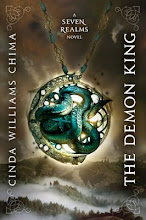
In The Demon King, Han Alister is an orphaned  streetgang leader who’s being hunted for murders he didn’t commit. Also, he’s carrying a magical amulet that could destroy him.
Princess Raisa ana’Marianna stands to inherit a political snakepit of a queendom from her mother the queen—if she can manage to hold off a rebellion of powerful wizards desperate to regain power.
In The Warrior Heir, Jack Swift is a high school student whose girlfriend just broke up with him. The principal hates him and he’s worried he won’t make the soccer team. Also, two powerful wizard houses are hunting him, meaning to play him in a deadly magical tournament.  
Alternative worlds expand options as well. The Seven Realms series takes place in a quasi-medieval world. In medieval times, sixteen-year-olds were adults, for all intents and purposes. And so, as a writer, I can put my teenage characters into dire and dangerous situations; I can shovel heavy responsibility onto their shoulders and send them out on the road without worrying about Children’s Protective Services.
3. Fantasy provides a forum in which to explore Big Ideas in a safe place. I don’t mean safe for the characters—I mean safe for the reader. Long ago and/or far away provides a certain distance.  It’s clearly a created world, even if I manage to entice the reader into it.
In the Queendom of the Fells, I can address environmental and gender issues without the distractions of contemporary politics. I can explore revisionist history without pointing any fingers. I can put the conflict between good and evil into stark relief in an ecumenical way.
            Fantasy can free the reader of pre-conceived notions, expectations, and biases and allow them to experience a different sensibility—new ways of looking at the world.
4. All fiction provides escape from real life, if only briefly. The reader chooses the escape that suits him or her best. A gritty contemporary novel may not offer escape from a gritty contemporary world.             Fantasy does.
5. Finally, and perhaps most important, fantasy is fun. In a world that seems bent on the destruction of pleasure reading, fantasy satisfies.

Wednesday, October 20, 2010

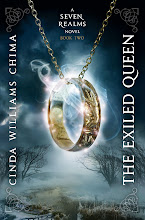
The Exiled Queen a New York Times Bestseller!

The Exiled Queen has entered its second week on the New York Times bestseller list at #6 in Children's Chapter Books after a debut at #4!

On-Sale Date for The Gray Wolf Throne
The tentative release date for The Gray Wolf Throne is September 20, 2011. Mark your calendars!

World Fantasy Convention Author Signing Event
Barnes & Noble OSU Campus Bookstore
Sat, Oct 30th, 11am - 1pm
1598 N. High Street
SE Corner of High & 11th
Columbus, Ohio 43201
p 614-247-2000
Come visit with me and dozens of other fantasy authors!

Sunday, October 10, 2010

Love Amid Chaos

I'm guest blogging over at NovelNovice.

While touring last year for the release of The Demon King, I participated in a signing in Oceanside, CA with the awesome Alyson Noel. There was, shall we say, a preponderance of paranormal romance fans.
We each did a brief reading. I chose a scene in which the former streetlord Han Alister is attacked by a rival gang. During the Q&A, one reader raised her hand and asked me, “Is there any…ah…romance in your books?”
Oh, yes. Romance. Had I thought it through, I would have chosen a love scene.
The Seven Realms quartet is, at its heart, a story of love and betrayal, played out against a backdrop of civil war, political intrigue, and magical disasters.
Princess Raisa ana’Marianna descends from the Gray Wolf Line, a dynasty of queens known for making poor choices in love. Raisa’s ancestor, Queen Hanalea, was ensnared by the wizard, Alger Waterlow, now known as the Demon King. Hanalea was forced to kill Waterlow when he nearly destroyed the world. That’s what you call a bad ending to a relationship.
A thousand years later, Raisa herself is the mixed-blood product of a troubled political marriage. Although she knows that she’s unlikely to marry for love, she can’t help hoping for it. In the meantime, she intends to find love where she can—whether with the Demonai warrior, Reid Nightwalker, or with her best friend, Amon Byrne, a corporal in her guard. She even steals away to be with the darkly handsome wizard Micah Bayar–although, these days, queens are forbidden to fraternize with wizards.
Raisa knows she’s playing with fire, but she’s also inherited Hanalea’s headstrong ways.
Han Alister is a former streetgang leader who is trying to leave the life. It isn’t easy. As a streetlord, he was feared and respected throughout the Ragmarket and Southbridge slums. He could take his pick of girlies—and he did, knowing he had little chance of growing old.
Now that Han’s gone straight, his family is close to starvation, and the Queen’s Guard is hunting him for murders he didn’t commit. The only thing of value he has is something he cannot sell—the silver cuffs he’s worn all his life and can’t get off. His mother says he’s demon-cursed, and sometimes he thinks she’s right.
When Raisa ventures into the Southbridge slum in disguise, chance brings her and Han together. They’re instantly attracted to each other, despite the social barriers and secrets between them. But they soon find out that there’s a price to be paid for a relationship built on a lie.
When writing about love triangles (quadrangles?) I want the reader to experience the jealousy, desire, angst and indecision right along with the viewpoint characters. And so each oppositional character has to be as real, as layered, as complex as possible. There are no black-and-white decisions, no easy choices to be made. Each character is imprisoned by history.
Born into a family of ruthless wizards, Micah Bayar has few scruples about doing whatever it takes to get what he wants. But, in his way, he loves Raisa, and just when you think he is despicable, he will surprise you.
Amon Byrne has inherited a family tradition of honor and duty that takes  precedence over his own desires–sometimes to Raisa’s dismay. Still, he is one of the few people Raisa can trust at the treacherous Gray Wolf court.
Han Alister has been running the streets of Fellsmarch since he was a lytling. Despite his violent reputation, he adheres to a code of honor as robust as Amon’s. He’s always been the one to walk away from relationships—but now he’s finding  that it isn’t always so easy.
Raisa is flawed, impulsive, a little spoiled to begin with. But she has the makings of a strong queen—if she lives long enough. Her ancestor, Queen Hanalea, sends Raisa a message—choose love. But just now that doesn’t seem possible.
Those are the players, and this is the stage. Since The Demon King was published, I’ve heard from Team Han, Team Amon, and even a few Team Micahs. And that’s just the way I want it.

Tuesday, October 5, 2010

Why I Write for Teens 2

Today I'm guest-blogging over at Forever Young, a YA Lit Blog.
WHY I WRITE YA


Reading was never more important to me than it was in my early teens—it bailed me out of real life at a time when I badly needed it. That’s when I began writing novels, too. I guess they were romances—the characters were based on me and my best friends. In my stories, we always got the cute guy. Which was great, because, in real life, no cute guy was even noticing me.

Through college and after, I continued to write fiction off and on, though I rarely finished anything. I began publishing nonfiction after my sons were born—mostly personal essays and feature articles for newspapers and magazines. As a mother who already had two full time jobs, it was easier to finish shorter pieces.

But, when my sons reached their teens, I wanted to write something they would enjoy reading. All three of us were fantasy fans, and so I returned to fiction, and began to write The Warrior Heir.

Mind you, I had no training for writing fiction, other than a lifetime of reading. I hadn’t had all that much practice, either. I had some skills—I’d done a stint as an advertising copy editor, I was a flaming fast typist (also courtesy of that advertising job) and had good spelling and grammar. And I had teenagers living right in my house.

Set in a small college town in Ohio, The Warrior Heir is about a high school student who discovers he is the last of a race of a magical warriors. He is being hunted by wizards who mean to play him in the Game, a magical tournament to the death. 

After four years of revisions, studying craft, and writing three more novels (The Wizard Heir, and the first two books of a mammoth high fantasy trilogy for adults) I found an agent. She shopped The Warrior Heir to publishers of adult and teen fiction, and it sold as YA. Followed by The Wizard Heir and The Dragon Heir, which became best-sellers.

Then I had a decision to make. What would I do next? And I found I wanted to write more books for teens.

There are no more passionate readers in the world than teens. I should know—I get the emails. After a main character died in The Dragon Heir, I received a deluge of emails from readers, including one from a boy that said: EPIC FAIL, CHIMA.

I don’t condescend to teens—they get enough of that in real life. I try to tell them the truth—to the best of my ability. In wartime, it’s not just the bad guys who get killed.

It’s not easy writing for teens—but it’s not easy being a teen, either. Anyone who thinks it is should not be writing for that audience. My now twenty-something sons laugh at me because I am largely ignorant of popular culture. But the emotional truth of adolescence—that’s what drenches me when I walk into a school and see those rows of metal lockers and smell that gym-floor sweat and hear the morning announcements. When I walk into a cafeteria, I can’t help but wonder if anyone will let me sit with them. I remember the visceral pain of unrequited love.

My Seven Realms cycle is set in the world I created for my adult fantasy trilogy. I chose two pivotal characters and went back to when they were sixteen—to when they transformed themselves into the adults they would become.

Book cover of "The Demon King"Raisa ana’Marianna is the princess heir of the queendom of the Fells, the mixed blood product of a troubled marriage between Queen Marianna and Lord Averill Lightfoot Demonai, Patriarch of a clan of upland warriors. She’s just spent two years with her father’s people in the mountains, hunting and working the famous clan markets. Now she’s back at court, rebelling against the constraints of that life.

Han Alister is a thief and streetgang leader who is trying to leave that life. He has a magical legacy, as evidenced by the silver wristcuffs he’s worn since birth. His mother believes that he’s demon-cursed, and there are times that he believes it, too.

All of my books are about transformation—that is the job of adolescence.

I frequently hear from young writers, and I make it a priority to answer their questions. I often post on writing topics on my blogs, and offer tools, tips, and links for them on my website.  

Book cover of "The Exiled Queen"I see my teen self in my teen readers. I don’t want to relive my teen years, and yet—visiting isn’t so bad. 

The Demon King is now available in paperback, and The Exiled Queen released September 28. There will be four books in the Seven Realms series, followed by two more Heir books.

Excerpts from each of my books are available on my website, www.cindachima.com. Help for writers can be found under Tips for Writers, including a document called, “Getting Started in Writing for Teens.”

Monday, October 4, 2010

Upcoming Exiled Queen Tour Events


Author Presentations and Signing

Monday, October 4, 2010, 7 p.m.
Booktenders’ Secret Garden
42 E. State St.
Doylestown, PA

Tuesday, October 5, 2010, 7 p.m.
Barnes & Noble
210 Commerce Blvd
Fairless Hills, PA 19030


Wednesday, October 6, 6:30 p.m.
Clinton Bookshop
33 Main St.
Clinton, NJ 08809

Thursday, October 7, 2010, 6-8 p.m.
Books of Wonder
18 W. 18th St.
New York, NY 10011
With Sarah Beth Durst and Yvonne Woon

Hope to see you there!

Saturday, October 2, 2010

The Art of the Crossover

Today, I'm guest blogging over at The Cozy Reader.


When I was a teen, YA lit was in its infancy, and so it was adult books that I devoured—everything from the original James Bond novels to my mother’s historical fiction. And fantasy—lots of fantasy, including Mary Stewart’s Arthurian novels, David Eddings’s high fantasy, Marion Zimmer Bradley’s Mists of Avalon, Tolkien’s The Lord of the Rings trilogy, and Mercedes Lackey’s novels. 
Fantasy is a natural crossover. Mainstream fantasy often involves coming-of-age stories, so it’s not uncommon for adult fantasy to have adolescent viewpoint characters. It’s a time of life when transformations occur and latent powers manifest.
These days, we’re seeing more and more adults turn back to the teen shelves to find compelling fiction of all genres, but especially fantasy and science fiction. http://www.guardian.co.uk/books/booksblog/2007/sep/19/thegrandtraditionofcrossov
Recent examples of crossover books include J.K. Rowling’s Harry Potter series, Stephenie Meyer’s Twilight, Kristin Cashore’s Graceling and Fire, and Suzanne Collins’s Hunger Games trilogy.
Those of us who write YA fantasy have our feet firmly planted in two different worlds—those of teen lit and mainstream (adult) fantasy. When you walk that borderline, you can end up pleasing both audiences, and so produce a highly-successful crossover that appeals to all ages. Or pleasing neither, and then your book ends up on the bargain table.
Mainstream fantasy fans are sophisticated readers familiar with standard fantasy tropes and archetypes and dismissive of stories that tread over familiar ground. They are usually willing to embrace high fantasy with its complicated names, magical terms, and detailed world-building.
Teen readers, on the other hand, might be enchanted with a classic fantasy story, well told. But they quickly lose interest if overwhelmed with excessive fantasy jargon and dense architecture. So it is a challenge to write fantasy that is both appealing to adult readers and accessible to YA readers in general.
My Heir Chronicles series (The Warrior Heir, The Wizard Heir, The Dragon Heir) is contemporary fantasy set in the magical Midwestern world of Ohio. I always intended it to be YA fiction, but my agent thought it might be attractive to adult imprints as well, so she shopped it to both. Some YA publishers said it seemed more suited for adults, and some adult publishers recommended that we try YA imprints. Eventually, two YA publishers made offers, and it sold as YA to Hyperion.
That was the best thing that could have happened. The Heir series has been a best-seller with teens, but has managed to attract adult readers as well.
My new Seven Realms series (The Demon King, The Exiled Queen) is high fantasy. It’s set in a quasi-medieval world I created for The Star-Marked Warder, an unpublished adult fantasy trilogy. For my YA series, I took two pivotal SMW characters back to when they were sixteen years old. Although I intended it for teens, the series is being published as YA fiction in the U.S., and as adult fiction in several countries overseas.
I don’t know that you can set out to write a crossover novel—you write the best story you can and then let the readers decide. Fortunately, a book that is respectful of teens as readers will often appeal to adults.
Here are some strategies that may help a book cross over:
·      Create layered, realistic, engaging characters. Although YA books will always focus on young characters, crossover books feature characters that resonate with all ages.
·      Get beyond high school. I don’t mean that your story can’t be set in a high school, or feature characters of high school age—but it should involve larger themes and a broader scope than who’s going to ask me to the prom or am I going to make the soccer team. Most adults have no desire to go back there.
·      Consider historical fiction. Period pieces can work well as crossovers. Extended adolescence is a modern phenomenon. In the past, teens were expected to function as adults—they were often out on their own, earning their own living, drinking in taverns and getting into the kinds of complicated situations and scrapes that appeal to adults and teens alike.  YA authors can often get away with more in a period piece—nobody worries so much about teens who grow up fast.
·      Consider voice. Voice relates to character and scope. A strictly YA voice tends to be very immediate, narrow and self-conscious; a crossover voice has a broader  perspective—it is more inclusive of the past, present and future.
·      Tell the truth, and never, never, never condescend. Neither adults nor teens want to read a book that has been “dumbed down” in any way.
·      Don’t try to teach anybody a lesson. If a reader takes away a lesson from your story, then fine, but story comes first.
·      Lobby for a cover with broad appeal. Adults don’t want to carry around a book that outs them as a reader of YA fiction.
The good news is that much of what appeals to teen readers appeals to adult readers as well—characters that they can relate to, tight, clean, accessible  writing and a fast-paced plot. In other words, a good story well-told.