I had a great time in Columbus at the OCTELA (Ohio Council of Teachers of English and Language Arts) conference. Believe me, it is stressful to get up and make a keynote speech in front of a whole room full of English and language arts teachers and reading specialists. But they gave me a warm welcome. I always feel in context with people who love books.
Karen Tollafield, the conference coordinator, and her committee did an awesome job. Here I am at the signing table with the raffle in the background.
YA author Sharon Flake, storyteller Kevin Cordi, author/teacher Steven Layne, and I did a roundtable session (though here it looks more like a lineup!)
Sharon was the keynote at lunch, and I attended Kevin's breakout on using storytelling in the classroom. I love hanging with authors and teachers.
Young Writer Writes:
Why aren’t more successful writers willing to mentor others? I mean, no offense, but we could use some help.
No offense taken. I have been where you are. This is a heart-breaking, frustrating business.
I think most writers do mentor others in a way that allows them to meet their other obligations. But what they can do may not match up with what another writer needs, wants, or expects.
I'm fortunate enough to be a full time writer (finally.) Believe me, I AM SO FRICKING HAPPY TO BE ABLE TO MAKE A LIVING AT THIS. Most writers—even published writers—have day jobs and many have families. For my first twenty-three years as a writer, I had a day job. I got up at 4 in the morning and fell asleep with my face on the keyboard at night. And then I used to hike three miles in my flip-flops through waist-high snow to the mailbox to mail off my manuscripts. Only to be blown off by publishers and agents alike. Year after year after year. With no guarantee that I would ever make any money.
I did get some help from other writers along the way, but it was mostly a reciprocal kind of thing—through critique groups, conferences, and blogs. I gave, and I got, and we all learned together. Participating in the community of writers is extremely important, if only because you will finally fit in.
I have learned the most from reading other writers’ books. That’s the best kind of mentorship. Reading really good books is like taking a workshop with a master—for free (if you get the book at the library.) But you have to learn to read like a writer, which is very different from pleasure reading.
I also read many, many books on craft. I have a shelf-full over my desk and still refer to them from time to time.
Many aspiring writers believe that published writers have more power than we do. My opinion is just that—one opinion, one set of biases. I’m not an editor—I’m a writer. Editing is a very different skill, believe me. In my one editing gig, it was always easier for me to rewrite something than to edit someone else’s work. That is not the kind of help you need.
I still work seven days a week (I’m trying to change that) but I do try to give back., while protecting my writing time. I blog on writing technique, teach writing workshops, do school visits, and try to answer emails from writers, either directly or through the blogs. I belong to three critique groups, one online, the other two in person. That’s what I can do, and meet my deadlines, and give my honey a hug now and then.
What most writers can’t do—for a multitude of reasons, legal and otherwise—is read your manuscript, edit it, and get you an editor or an agent. We can’t give you the magical shortcut to publishing success. Trust me—If I knew what that was, I would have used it myself.
Mac's Backs Books on Coventry
Author appearance and signing
Saturday, March 13, 2010, 4-6 p.m.
1820 Coventry Rd.
Cleveland Heights, OH 44118
Tel: 216-321-2665
Ohio Council of Teachers of English Language Arts (OCTELA) Keynote Speaker
Spring Conference 2010
March 27-28, 2010
Doubletree Hotel Worthington
175 Hutchinson Avenue,
Worthington, Ohio 43235
More information at http://www.octela.org/newoctela/newspconf.html
Children’s Book World (Philadelphia area)
Author Event and Signing
April 6, 2010, 7:00 pm
17 Haverford Station Rd.
Haverford, PA 19041 http://www.childrensbookworld.net
IN OTHER NEWS
El Rey Demonio
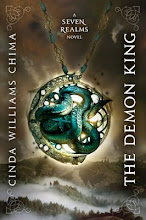
The Demon King is being released in Spain by Ediciones B.
Here’s the cover, which uses the same art as the US version.
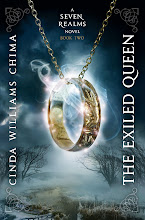
If you haven’t visited my webpage lately, well, you know, better go there! It’s newly updated and revamped (thanks Webmaster!) with info about The Exiled Queen, upcoming events, and more resources for writers. Check out my new document, Getting Started in Writing for Children and Teens (PDF) available for download on the site under Resources/Tips for Writers.
So last month I went to San Antonio for a writing retreat with six members of my YA writer critique group (writers Debby Garfinkle, Jody Feldman, Martha Peaslee Levine, Kate Tuthill, and Mary Beth Miller.) The group is called YAckers—which says a lot about what we do when we get together. We meet online mostly, but try to meet in person at least once each year. It is a gathering of Literary Goddesses in search of the muse, and involves prodigious eating, drinking, visiting, sightseeing, shopping, whining, bragging, and, yes, some writing and critiquing.
We stayed in a bed and breakfast (Alamo Street Victorian Inn) and had the whole place to ourselves most of the time, except for the owners and a handyman named Paul who buzzed around us like a yellow jacket at a late summer
picnic.
Novelists have special challenges when it comes to seeking effective critique. Many critique groups read a chapter a month. I belong to a couple of those. They are great resources, but we never get even halfway through one of my novels in a year’s time.
Also, it’s an odd way to read a novel. There’s no opportunity to enter the dream of fiction, and it’s easy to forget what’s going on, month to month. If your readers can’t remember who Jason is, is it because you didn’t do your job as a writer, or because it’s been two months since Chapter 3?
Each chapter can work perfectly well, but the entire story arc may be flawed, the characters erratic and inconsistent, and the ending unsatisfying. If nobody ever reads more than a few chapters, you’ll never know.
So for our retreats, we submit novel-length works to the group ahead of time, and spend several hours discussing each piece submitted. The Goddesses are smart, savvy, experienced readers who work in unrelated genres. And I came away from my personal critique session saying, “Why didn’t I see that? Of course!!”
One of Many YAckers Food Opportunities at Boudreau's
It’s a safe environment in which to vent, seek wisdom, and ask the “Am I crazy?” questions. What happens in San Antonio stays in San Antonio.
On the shopping front, we are very good at encouraging each other’s vices. Martha bought jewelry, Debby and Jody bought art. I found a nifty silver wrist cuff in a shop at LaVillita. When I showed it to my fellow YACkers, they said, “You have to buy two!!” You see, there’s a character named Cuffs in my current fantasy series who wears magical silver bracelets on his wrists.
Author appearances!! School visits!! Tax deductible!! they said. And, You know you want to.
So nothing would do but I went back into the store and bought a second cuff (and gave a bookmark to the store owner whose who theorized that I was either Wonder Woman or they were slave bracelets and I was into S&M.)
Like usual, we bought too much wine. Like usual, we ate too much good food. Like usual, we were a little amazed we pulled it off, since we’re all busy with families and jobs and we live all over the country.
Anyone who’s serious about writing fiction has read those books on how to write a novel—the ones that say we should sit down and create character profiles and answer 25 questions about our characters including physical description, religious affiliation, rents or owns, home décor, pets, early riser or late sleeper, favorite color, prejudices, commonly used swear words, tea or coffee, regular or decaf. We need to know what they would carry in their pockets and what they are afraid of.
After that, we’re supposed to write a chapter outline, or at least a synopsis, including opening, major conflict, crisis, and resolution.
I’ve tried it that way. It doesn’t work for me. By the time I’m done with all that, the juice has been wrung out of the story. It’s like an old piece of tough meat I’ve chewed on for too long.
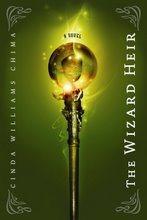
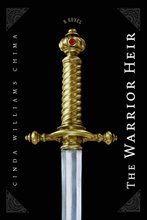
When I began writing The Warrior Heir, I had no idea what would happen. After five years of revision, it barely resembled the work I’d started with. The Wizard Heir process was similar, though a bit more efficient, because I’d already built a world and a magical system.
This is so unlike me. I am very much a planner. I don’t even like to go shopping without a plan in mind. I mean, I was the kind that always did the index cards for the term paper.
I can’t stand the idea of Wasting Time, backing out of blind alleys, cutting chapters, undoing and redoing. It’s just so inefficient—all that grumbling and gnashing of teeth. “Well, if I’d known this was going to happen, then back at the beginning I would have….”
But I’ve had to accept the fact that, when it comes to fiction, I am very much a plunger. I have to keep writing in order to find out what happens. Connections, motivations, and relationships surface that I never anticipated.
Characters? My characters reveal themselves as the story unfolds. I do keep character tables, with descriptions, etc. so my brown-eyed person doesn’t turn blue-eyed in the third book of a series. But I do it after the fact.
Full disclosure: there is a character who has different colored eyes in each of the Heir books. Unintentionally.
When I began to write The Seven Realms series, my agent wanted to sell it as a three-book deal. It was the first time he tried to sell books that I hadn’t written yet.
I gave him forty pages. My agent said, great, now just give me an outline of each of the three books. And I’m like HAHAHAHAHAHA as I see the taillights of the three-book contract dwindling in the distance. And he said, well, how about a paragraph for each book? And I said, Do I have to stick with what I write? And he said, No once we get the money, do whatever you like.
I love my agent.
So he made the deal and I launched into the three books, and now, finally, at the opening of the third book, I’m using the forty pages I submitted.
I often ask writers I meet—do you outline ahead of time? And most don’t. In an extremely unscientific poll on an e-list I’m on, I asked accomplished writers if they outlined ahead. After I sorted their answers, out of eight, only one described herself as an Outliner, though she referred to it as a plot skeleton. Four were middle-of-the-roaders—they had some kind of framework, even if it was notes written on a matchbook cover. Three were total plungers.
There are exceptions. I heard Bruce Coville say at a conference that since he began outlining, he has fewer unfinished books. And James Patterson apparently outlines his books and hands them to a stable of co-writers to complete.
For me—no outline. Yes, it’s messy. Yes, it requires a lot of revision. (Shrugs.)
Do you need to know how it all ends before you begin? I usually do, but not everyone agrees. E.L. Doctorow famously said of writing, “It's like driving a car at night. You never see further than your headlights, but you can make the whole trip that way.”
Well, maybe. But you still have to have a destination in mind. I usually know where I’m going. I just don’t know how I’ll get there, or how long it will take.
Well, enough ranting for a while. Now I’ll turn to excusing my own bad behavior by attempting to tarnish others. I’m launching a kind of guilt class action—let’s if it sticks. Here goes.
I’ve noticed I have a bad habit of making up stories about people. Not just about the characters in my books, but about people I barely know.
And, no, I’m not the one that started that rumor that you kissed Bobby Malone behind the bleachers. That was so totally not me. I’m not talking about gossip. These stories are not ever shared with anyone else. Which is a good thing, because many of them are just plain wrong.
When I meet someone, and I know little about them, I take the few facts and observations I have and spin them into a whole set of assumptions based on how they look, their clothing, and what they say and do. Not to mention the fact that they resemble my cousin who used to beat me up, my aunt that I adored, or the teacher I had in seventh grade who used to smoke in the principal’s office.
I create history, motive, intentions (good and bad) personalities, gifts, talents and flaws. I make ordinary people extraordinary, whether they want to be or not, and sometimes fail to give credit where credit is due.
I’ll see somebody crying in an airport, and pretty soon, I’m sniffling, too, because I know she’s going home to bury the child she never knew. I’ll see a couple squabbling in the grocery store, and I’ll find myself taking sides, creating a back story to support my choice, even though I really know next to nothing.
You’re too controlling, I say to myself. She’s not the same person you married, so deal with it.
In effect, I write their story for them, without their knowledge, input or permission. A story that may have only a nodding acquaintance with the facts.
I know everyone does this to a degree. That’s why we say things like, “Don’t judge a book by its cover,” and “It’s what’s inside that counts.” But, hey, I’m a writer. I have a fertile imagination. My stories are remarkably detailed and incredibly persistent.
It’s bad enough when I do this with strangers that I’ll never see again. But if it’s someone I interact with on a regular basis, my stories are put to the test. When reality contradicts them, I resist revision. I feel resentful and betrayed, like the person made a promise to me and didn’t keep it.
But you’re supposed to like dogs, I think. You look and act like someone who would. But I thought you’d be funny. You remind me of my friend from college who always made me laugh. Or, you’re not supposed to want the same things I do. You’re supposed to be all noble and selfless. That’s the role I assigned to you. What gives?
Meanwhile, of course, the person soldiers on, totally oblivious of their part as a character in my story.
Anybody else guilty of this?
In my previous post, I expressed misgivings about using Lexiles to select books for pleasure reading for middle and high schoolers.
I appreciate all the thoughtful comments from people who are more expert than me in reading and library science. Thank you!! Librarians and teachers: you are my people!!
Before I let this topic go (my heavens, a 2-blog rant!) I thought I would try using the search program on the Lexile website to find books within a particular Lexile range that I might like to read. I used the grade level ranges, though I understand that standardized testing generates a Lexile level for individual students.
Let’s say I’m a 10th grader, and I find books at my grade level easy to read. That translates into a Lexile of 1155 to 1390, according to the website. I narrow my search to fantasy juvenile fiction, ages 14 and up, because that’s what I like. The result: a total of six books. Out of a huge database. They seem oddly young, too—not high interest for 10th graders. The ages ranges on the specific books are 7 and up, 8 and up, 10 and up. Examples include Tales of Beedle the Bard, Wizardology, and Arthur Spiderwick’s Field Guide.
If I search general (not juvenile) fantasy fiction, I get eight books: two H.G. Wells, one Arthur Conan Doyle, a 1983 science fiction book by James Hogan, a science fiction textbook, a fantasy textbook, an Arthurian tale, and one R.A. Salvatore Forgotten Realms series fantasy novel from 1993. Mostly science fiction, and nothing contemporary at all. It seems like the older the book, the higher the Lexile level.
Well, maybe it doesn’t work so well for high school. How about middle school?
OK, I’m a seventh grader with a high reading level (Lexile of 1040-1270.) That would be my own target reading audience. Again, I search for juvenile fantasy fiction, age 12 and up. We’re doing better. We turn up 32 books this time. And some of them have been popular with teens who self-select (Brisingr, Blue Moon, Sabriel, Chalice, Princess Ben.) But the list also includes three old Wizard of Oz books, H.G. Wells’s Time Machine, and some that look like picture books. And there is no guarantee how many of these books are going to be in a given library, or appeal to an individual reader who, say, likes urban fantasy. Fantasy is a broad genre, and this is pretty limiting.
Hmm, I think. Let’s take a different approach. I’ll look for books in a similar Lexile range to my latest book, The Demon King. Now The Demon King is 512 pages, a complex high fantasy with multiple character viewpoints aimed at ages 12 and up. It has a Lexile level of 760. Oops. According to the Lexile website, that’s equivalent to a fourth grade reading level.
This is the same book that is being published as adult fiction in several countries overseas.
Let’s see what else is in this range (660-810L), ages 10 and up.
Wow. I have a lot of competition for those fourth grade fantasy readers. I get 692 books! There’s lots of good stuff here. Tamora Pierce’s fantasy novels, Jonathan Stroud’s Bartimaeus series, Suzanne Collins’s phenomenally best-selling The Hunger Games. More best-sellers include Rick Riordan’s Lightning Thief series, Scott Westerfeld’s Uglies trilogy, Cassandra Clare’s Mortal Instruments series, Kammi Garcia’s Beautiful Creatures and Maggie Stiefvater’s Shiver, Libba Bray’s A Great and Terrible Beauty series. Also, of course, the Twilight series, and all four of my YA novels.
There are award-winners like the Newbery winning The Giver, Cornelia Funke’s Inkheart series, Jeanne DePrau’s City of Ember, Gail Carson Levine’s Ella, Enchanted, and the Best Books for Young Adults 2010 top-tenners The Demon’s Lexicon and The Reformed Vampire Support Group.
Hmmm. Here are Annette Curtis Klause’s Blood and Chocolate (ages 14-17), Neal Schusterman’s Unwind (ages 13-17) Kristin Cashore’s popular and award-winning Graceling and Fire (ages 14 and up). Some a little edgy for that high level fourth grade child.
But, keep in mind, based on Lexile level, none of these books would be offered to a high-reading level 7th grader. They wouldn’t be “hard” enough.
By the way, some picture books, including Where the Wild Things Are, by Maurice Sendak (740L) are in the same range. It’s actually at a higher Lexile level than my novel, The Wizard Heir (690L), which is 458 pages long. Who knew? And, Young Merlin, 25 pages long, for ages 4-8, is also ranked more difficult than The Wizard Heir based on Lexile.
Anyway, when it comes to pleasure reading, I’m going back to fourth grade, I guess.
OK, I’m having fun here. And I admit: it’s possible I messed up somehow, though I believe I used the search function the way any parent or child would to find a book. My point is this: it would be cool to match readers to books they could successfully read. But as soon as you develop a score, rating, numerical evaluation of something, it takes on a life of its own. People begin to misuse it, even though the developers of the system have disclaimers on the website about responsible use, considering content, etc.
Plus, I shouldn’t have to tell you this, but just because something is difficult to read doesn’t mean it’s worth reading.
Even when it comes to reading level, a formula based on difficulty, e.g. strictly sentence length and word frequency, seems limited. Also in play are the length of the book, the complexity of the story, the metaphors and imagery used, the theme, the content, the subject matter, and the pacing. I would argue that a 458-page novel is more challenging to read than a picture book, and more suited to a high level reader. I don’t care about the length of the sentences.
I freely admit, I’m no expert, just a reader and a writer and a parent. But as someone with a vested interest in nurturing pleasure readers, I’d rather have a librarian or teacher talk to the student, find out what they’re interested in, what else they like to read, and direct them on that basis. If the book is too challenging, it will take about a minute for the kid to figure it out. Trust them.
And the last thing I’d want to do is take a book out of a kid’s hands that he or she wants to read, because it’s not hard enough.