Wednesday, September 30, 2009

Welcome Back, Greta Garmin

Greta stopped speaking to me.
Was it something I said? Did she disapprove of my infrequent trips to the mall? Was I spending too much time in parking garages, while she searched for me in vain? Was I spending too much time with Google Maps?
Did I ignore her once too often?
I’ve blogged before about my love affair with my GPS, Greta Garmin. It’s easy to develop a relationship with any machine that talks to you.
Whenever I miss a turn, or choose not to follow Greta’s directions, she says, “recalculating” in an exasperated, eye-rolling tone of voice. It’s like she’s thinking, You asked me for directions, or How hard can it be to turn when I say turn? But she never gives up on me. She has endless patience, not like SOME PEOPLE. She’ll recalculate till the cows come home. Or I do.
So you can imagine my concern recently when Greta’s voice began to falter, dwindling to a strangled, truncated croak. The screen directions were still there, but that requires me to take my eyes off the road and try to focus on that little screen. I might as well try and read a map.
Desperately, I tried the British voice, the male voice—none Greta, Ready to Helpof them spoke to me, either.
My son has the same model Garmin. His has also begun to fail—in his case, the voice is fine, but the screen has dimmed until it’s nearly unreadable. He feels comfortable reading and wrangling electronic devices in the car. He’d rather have the screen than the voice.
Put the two together and you have one fully-functional Garmin.
It used to be when I headed out on a car trip, I would consult a map, plan my route, and carry multiple maps in the car in case I lost my way (as I often did).
With Greta aboard, I just launched, confident I could find my way there and back. School visit in a small town? Piece of cake. Find my conference hotel in a city filled with one-way streets? No problemo. Take back roads to the airport in a strange town? She has my back.
Without her, I feel cut loose, orphaned, like Hansel and Gretel without the breadcrumbs.
I contacted Garmin, only to find that Greta was eight months out of warranty. But they agreed to send a refurbished unit as a good will gesture.
And now she’s back—good as new, though just a little put out at being sent away. I’ll make it up to her. We’ll take some long road trips together—just the two of us.

Friday, September 18, 2009

The Demon King Book Tour

Well, here's the tour so far. We are supposed to add dates in San Francisco. I posted the events on Google Maps and will update as needed. You can view details here or here.


Hope to see some of you at these events!!


View

Tuesday, September 15, 2009

NOH SCBWI Conference

This past weekend I participated in the Northern Ohio Society for Children’s Book Writers and Illustrators conference, planned by co-chairs Laurie Knowlton and Vicki Selvaggio, with their committee of volunteers. They had a record turnout of over 155 attendees (they had to cut off registration.)
Editors attending were Margaret Miller from Bloomsbury Children’s Books, Harold Underdown, author of The Complete Idiot’s Guide to Publishing Children’s Books, and Elizabeth Bewley from Little, Brown Books for Young Readers. Tim Gillner, Art Director from Boyds Mills Press handled the illustrator track. Authors included Andrea Cheng, Kathianne Kowalski, Bonnie Pryor, and me!
I presented a workshop called “Ensnaring the Wary: Engaging the Middle Grade and Young Adult Reader.” The two hours flew by (for me, anyway, and hopefully for the participants).

I always seem to have too much information to present. My university students used to accuse me of vomiting information on them. I shared that story with the workshop. Afterward, someone wrote that she was never so happy to be vomited on! (!) I don’t know that I can quote that on my website!
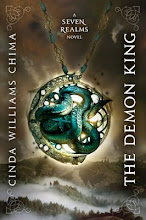
I showed off my sample copy of The Demon King. Gorgeous!

Between the workshop and manuscript critiques, I didn’t have the opportunity to attend the other breakouts, which looked awesome. Harold presented a great, upside/downside overview of the current state of the publishing business, and Elizabeth Bewley spoke in general session on writing for teens. Margaret Miller’s presentation on working with an editor made us all want to work with her!
Conference attendees ranged from newbies exploring the world of children’s lit for the first time to multi-published experts. Laurie asked attendees to group by geographic area so critique groups could be formed to carry on the journey.
I had a great time reconnecting with friends. I’m still smiling!

Thursday, September 3, 2009

Major Surgery


Don’t get me wrong—I love the revision process. When I teach writing workshops, I always tell students, if you can’t deal with revision, don’t be a writer, because you’ll be doing it all your life.
There’s the revision you do yourself, before you let anyone see your heart’s work; the revision you do after your trusted readers give you feedback. Sometimes it’s even hard to stop revising and send your work out.
And, of course, if you send it out, and you’re lucky enough to be published, you will be revising in response to your editor’s feedback. Ideally, that partnership results in a better book. But that doesn’t make it any easier when you get that editorial letter and the work you thought was basically done isn’t.
So I’m in the middle of this major revision. I’m wrestling with this 500+ page manuscript. I wrote 150 new pages, revised everything else, then cut 100 pages. Today I decided to move this one scene. But one thing led to another, and now everything is scrambled. This is the kind of situation that results in mistakes. And heavy drinking.
When I was in junior high school, I was a volunteer at a VA hospital. They didn’t allow visitors under 15 on the floor, but I was there, at 14, volunteering. One thing that struck me was that the patients always looked worse when they came back from surgery—pale and wounded, sick, and confused. On life support. And I remember thinking—this is a good thing?
Depending on the seriousness of the surgery—er—revision, your book can look worse before it looks better. Sometimes you’re afraid it will never recover. You hope that once you’ve repaired the plot holes and cut away the dead tissue, your book will be healthier for it.
Not enough metaphors for you? I’m a professional writer, after all.
My husband works in stained glass. He was making a lamp recently—had it almost finished, and set it aside on the floor to clear his work table so he could work on something else. Somehow, he stepped on it, shattering several panels. He had to cut out the unsalvageable, replace it with new, and somehow make it fit back together.
He came upstairs and said, “I think I finally understand what revising a novel is like.”
I said, “Welcome to my world.”
I was secretly glad I didn’t have to solder anything. Words, I can do.


Tuesday, September 1, 2009

Cover Story

In my last post, I discussed the controversy regarding misleading book covers.

I’ve been so lucky with my covers. All of them have been designed by the genius Elizabeth Clark at Disney-Hyperion; the cover art for the last three were done by illustrator Larry Rostant .

I’ve been to bookfairs where I’ve seen teens walk by, spot my books on display, and make that sharp turn we all hope for (toward me, not away). You can’t ask for more than that.

With The Warrior Heir, there was a huge controversy about roses on the cover (which I like to refer to as The War of the Roses). The question: Would boys buy a book with roses on the cover?? Even one with a big sword in the middle?

If so, what kind of roses were the most macho? These?

Or these?

In the end, the book designer made the decision to leave the roses off.

With The Wizard Heir, my editor came to me and asked, What ‘s an object we can put on the cover, you know, like the sword? And I couldn’t think of any. The wizards were using amulets, but they were mostly nondescript stones with runes on them.

Well, my editor said, could you put in a wizard staff or something? I couldn’t picture Seph McCauley walking around with a wizard staff. So I gave one to Gregory Leicester.

Did you know these things went on?

By the time I wrote The Dragon Heir, I knew enough to be thinking ahead. Dragons, I thought. Dragons were always good on a cover. So I put the Dragonheart on a cool dragon stand.

With The Demon King, the book design was tricky. As the first book in a new series, we wanted a design that would tell my current readers to pick it up, that it was a book by an author they knew. But we wanted it to be different enough that people would realize it was a new series. I want to attract new readers without disappointing fans of the Heir Chronicles.

We thought a landscape background would set it apart.

That didn't seem atmospheric enough, so

They revised the layout to be more similar to the Heir Chronicles, and added the text, A Seven Realms Novel, to let readers know they were onto a different series. I just received the proof of the final cover, all foiled and spot varnished. It’s gorgeous.

The important thing is—when a book cover makes a promise, the book must deliver. Or nobody’s happy.

Friday, August 21, 2009

Misleading Book Covers

Recently there was a hot controversy about the cover of Justine Larbalestier’s new release, Liar, because the image of the person on the cover didn’t match the way the viewpoint character was described in the book.
Her U.S. publisher, Bloomsbury, ended up changing the cover, delaying the release of the book.
How important are book covers to the success of a book?
I would say, very important, for teen books especially. When I speak at schools and libraries, I talk about the process of cover selection and design and show various versions of my book covers. When I ask teens, “Do you judge a book by the cover?” the answer is um, yes.
Watch a teen browsing in a bookstore some time. The book cover is what persuades—or dissuades—a teen to pick it up. Then they’ll look at the flap copy, maybe read the first page, and flip through to see how dense it is.
Because covers are very important at the point of sale, this has sometimes lead to misleading covers. For example, you don’t want a cover that says “pompous, boring and wordy” or “totally incoherent” even if the book inside matches that description.
Have you ever felt betrayed by a book that doesn’t keep the promise that the cover made? Here’s a possible example. BTW, this book was not written by Dan Brown.

John Green makes a strong argument that misleading covers are a bad long-term sales strategy. The idea is not just to sell to the largest audience, but to sell to the right audience that will like the book and sell it through word of mouth.
The Demon King is out in the Netherlands. The Dutch cover is very cool—but it doesn’t really match the book.

The book contains no dragons, no sailing ships, no cool wizard staff like this. The cover does promise fantasy. Oh, yeah—the title is different, too. The Dutch title means, “Black Magic.” I’ve been getting fan mail from the Netherlands, and nobody’s complained about it, though somebody did write and ask why the title is “Black Magic” in the Netherlands, and “The Demon King” in the U.S. Answer: I don’t know.
Next post: more on covers

Tuesday, August 18, 2009

The War of the Flowers


Recently, I blogged on the topic of my new, laid-back approach to dealing with garden pests.

There is one major exception to this tolerant view—the Japanese beetle.

My feud with this voracious plant assassin goes back to the year I first planted roses. My roses looked beautiful until about the Fourth of July, when the mature beetles erupted out of the ground. I’d walk out to the garden to find my flowers covered in beetles. They seemed to have a knack for picking out the most beautiful buds, the loveliest flowers in full-blown glory—and ruining them.

Not only that, those beetles were copulating on my roses, they were coupling up and having sex while they chomped my flowers to bits. They emitted pheromones, calling their comrades to join the fun. Talk about your multi-tasking. Meanwhile, their devilspawn offspring lurked under the turf, grazing on the roots of my grass.

I tried those Japanese beetle traps, and my neighbors thanked me, because they drew all the beetles to MY yard. I crawled around my yard with a teaspoon, seeding it with milky spore to kill the grubs. With no apparent effect. Apparently you have to also convince all your less-obsessive neighbors to crawl around on their lawns, too. Or offer to do the crawling for them.

I tried systemic insect controls, even though I don’t like using pesticides in my garden. The beetles treated it like a condiment. I looked up “Japanese beetle controls” online. Nematodes were described as providing “marginal” control, and the extension service bulletin noted that milky spore “may not be effective in Ohio and Kentucky.” Nobody promised me a beetle-free future.

Anyway, it was fun looking at the pictures of nematodes invading the bodies of Japanese beetle grubs and parasitic fly maggots boring their way into the thoraxes of the adults.

Or consider our friend, the Japanese wasp tiphia vernalis. “The female wasp digs into the soil, paralyzes a beetle grub by stinging, and then deposits an egg on the grub. When the egg hatches, the emerging wasp larva consumes the grub.” HAHAHAHAHA!

I’m not usually like this.

Now that I work at home, I’ve resorted to a marginally effective but completely organic and simple approach. When I take writing breaks, I walk out to the garden, pick off the beetles, and drop them into a jar of soapy water. I don’t know what it is about soapy water that kills them, but it’s fast-acting, whereas a beetle can swim around in a jar of plain water for a couple of days. (Trust me on this.)