Saturday, June 23, 2012

Winning the Weather Wars

I live in northern Ohio, which for some reason isn't known for its great weather. In fact, we have great weather for, well, most of the year. For instance, today it's sunny and breezy, 75 degrees, and I'm sitting on the side porch drinking iced tea and I can't think of too many places where the weather is better than this.
We don't get credit for that.
When friends and family move away to what they consider to be a better climate, they tend to monitor the weather back here. Then, during one of our especially nasty winter storms in January, they call up and say, "Hey! How's the weather there? I hear it's really awful." Even though I don't ask, they say, "It's 80 degrees here, gonna play a little tennis later on. So glad I don't have to go out and shovel! HaHa, loser." Well, maybe they don't say "loser," but that's what I hear.
I've found there's no winning this weather game. Even when the weather is bad there, it's better than here.
When it's 115 degrees there, you say, "It's a dry heat."
When it's 25 below, you say, "At least it's sunny."
When a blizzard blows in out of the Rockies, you say, "It never lasts very long around here."
I guess I have some options. In mid summer, I could call up and say, "Hey, I hear your whole state is charred to a crisp! It's really green here, just brought in another armload of flowers. Well, I'll let you go, you better go out and swat some sparks and hose down the outbuildings again." Or during the hurricane, I could call and say, "How's the weather? I heard you were having some trouble. What? I can't hear you, sounds like it's blowing up a storm. Yeah, it's pretty calm here. Still got our siding and everything." 
Or I could email a link to this great new tarantula and scorpion repellant I came across. Thought you could use this. Us? Yeah, here we had a bit of an ant problem in the spring. Nothing like YOUR ants, a course.
But I wasn't raised that way.

Thursday, June 14, 2012

Don't Dry Clean Your Jeans


When I was in high school and college, I worked in the classified phone room at the Akron Beacon Journal with a mélange of people. Some were lifers—the full-timers, with contract accounts and a desk name. Miss Allen. Miss Dodge. Miss Jackson. Others were part-timers, usually women on their way to somewhere else. Since we only met customers over the phone, the dress code was flexible for the times.
One of my co-workers was Lucine, a whip-thin girl with quick hands and a brilliant smile. Though she hadn’t much money (none of us did) she always looked fine. Right down to her dry-cleaned jeans.
I couldn’t get over that. “You don’t dry-clean jeans,” I told her.
“Why not?”
“Well. That’s the whole point of jeans.”
“I like the way they look. And that way I don’t have to iron them.”
“Iron? There’s no ironing of jeans!”
In my teens and twenties, jeans were my uniform, my go-to wardrobe item. Something I could wear until they stood up by themselves, then throw into the wash with the hottest possible water.
Each time they would emerge a little bit softer and easier on the eyes. Friendlier to my body. More and more mine. I’d wash them and wear them until they were a second skin; until the hems became frayed from walking on them. Made shabby by love.
It was bad enough when pre-washed jeans came along, all soft colors and manufactured shabby. No longer did you have to put in your time with board-stiff blues to get there.
So recently I got me some of those miracle jeans that are supposed to make you look five pounds thinner and three inches taller. They were comfortable as soon as I put them on, so I went out and double-dug my garden in them. When I went to toss them in the wash, I happened to notice the care tag.
MACHINE WASH COLD DELICATE CYCLE SEPARATELY DO NOT BLEACH HANG DRY USE COOL IRON IF NEEDED FOR BEST RESULTS DRY CLEAN
Never mind the COOL IRON IF NEEDED, since I knew from the start that NO ironing was needed. But DRY CLEAN? DRY CLEAN blue jeans?
What is the world coming to when a person can’t rely on a pair of jeans to survive in the wash?

Friday, March 23, 2012

My First Trip to Europe

Dining Hall, Christ Church College, Oxford

I come from people who don’t travel overseas except in uniform. Or in chains. My ancestors came here a long time ago—mostly from England, Scotland, and Ireland—likely in chains. Once here, they pretty much stayed put. And it never occurred to me that I would be among the first to break through the family inertia.
Susie in Oxford Garden
            I worked my way through college in a minimum wage office job. In those days, a person could pay for college that way if she lived at home and went to dollar  movie nights at the university. Me, I was paying my tuition and also saving up money to get my teeth straightened, something my parents couldn’t afford.
            And then my friend Susie suggested that I go with her to Europe.
            She had signed up for an English literature tour through the university, and also planned to travel the Continent on the cheap, with a Eurail pass and a series of  $5 and $10 a night hotels.
            Cheap was still extravagant to me. But I did it anyway. I took that orthodontics money and squandered it on a trip to Europe.
It was the best decision I ever made. It changed my life.
Ralph Sykes and Bus
In England, we traveled in a little bus that could get to those narrow places that history happens. Ralph Sykes Davis was our bus driver and guide to real life. Arthur Kincaid, a doctoral candidate at Christ Church College, was our mentor in all things literary.
Arthur Kincaid
For two weeks, we traveled throughout England. We saw Diana Rigg as Lady Macbeth at the Old Vic in London. We toured Westminster Abbey and paid our respects to the poets in their corner.
I got drunk for the first time. I recall staggering through the streets of Camden Town, heading back to the dorm at the University of London. 
On the Altar Stone, Stonehenge
Leaving London behind, we visited Stratford On Avon, and toured Ann Hathaway’s cottage. We walked the lonely moors in Hardy Country and stood in Keats’s garden. At Canterbury Cathedral, we saw the spot where Thomas Becket was martyred. I still love a good murder story. 


We visited Stonehenge, and I sat on the altar stone and dreamt of old gods and old rituals. We visited Christ Church College, Oxford. You know what the dining hall looks like if you’ve seen the Harry Potter movies.
Ann Hathaway's Cottage

Dungeon Ghyll Hotel
In the Lake District,we stayed in the Old Dungeon Ghyll Hotel, still a hangout for climbers. We visited Dove Cottage, Grasmere, Windermere—all the places immortalized by Wordsworth, Beatrix Potter, Coleridge, and others.
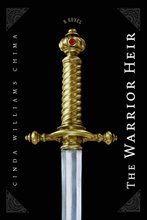
That was decades ago, but I am still mining those experiences. Scenes in The Warrior Heir take place at St. Margaret’s Church, near Westminster Abbey. The magical guilds were born in a fictional spot in the Lake District called Raven’s (Dragon’s) Ghyll—modeled after the Dungeon Ghyll and Raven’s Crag, a pike I climbed with Susie.
It’s a landscape that would turn anyone into a poet. It made me raise my eyes from the ground in front of my feet and see new possibilities. It’s taken a long time to get here, but the journey began in England.
Last week, I went back.

Tuesday, March 13, 2012

How to Write in Alien


The Reader writes: What’s the best way to handle alien languages in a story? Do I put the translation in parentheses right after the sentences in Alien? Or do I use italics? Or maybe put a glossary in the back?

The Writer writes: Generally it's not a good idea to have lengthy passages/conversations in an alien, magical, or foreign language, even if translated. That slows down the pace and has the potential to send the reader elsewhere. Tolkien got away with it, but that was a while ago, he was a linguist, and even then, it was mostly in songs that readers could skip over if they chose.
Where alien or foreign languages are being used, if your viewpoint character understands the language, then it's already translated in his/her mind for the reader. If she doesn't understand the language, then it's just gibberish (no translation available.) 
A good way to indicate a foreign speaker through dialogue is by using sentence structure and word choice in English to indicate that it is someone who is speaking a foreign language, while throwing in the occasional key foreign word, where the meaning is clear from context.
I don't have any aliens in my books (yet!) but people do speak different languages, and that's usually handled this way:
"Get out of my way!" Han said in Common, a language that even an Ardenine would understand. 
Or "You're not going anywhere!" King Girard shouted in Ardenine, the harsh Southern syllables echoing in Raisa's ears. 
I also use quite a few magical terms and slang words, which are explained, usually by a character or by context. For instance, a character says, "It's aelf-aeling. Also called Wizard Flame. It's like an amplifier for power."
Or, through context, as when a character says, ana memorare. When the victim loses his memory, the reader figures it out. 
A glossary can be helpful for reference, in case a reader wants to double-check a meaning or takes delight in magical trivia (I have readers who do.) But glossaries, character lists, maps, and the like should be considered enrichment—an additional resource for the interested reader. The book should be readable without it.


Friday, March 2, 2012

Seven Realms Promo in People Magazine Out Today!

This gorgeous advertisement is appearing in today's People Magazine Hunger Games special issue.

Thursday, February 16, 2012

Crimson Crown First Pass Mechanicals

It's um ~600 pages. Girding up loins (or whatever it is we use to edit.) Readers: gird up reading loins!

Tuesday, February 14, 2012

The Crimson Crown Cover Reveal!

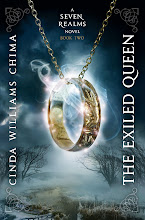
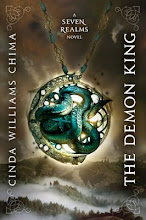
They've done it again! The awesome Hyperion book designer Tyler Nevins and the incomparable illustrator Larry Rostant. They have created a show-stopping cover for The Crimson Crown, the fourth book in the Seven Realms series.
Here is the front cover. That is the Bayar double-falcon amulet in the center.


I can't wait to hold this book in my hot little hands!
To come: snippets, jacket copy, and, eventually, the first chapter.