Thursday, April 23, 2009

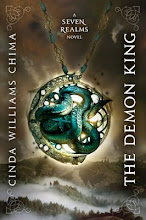
Final Cover for The Demon King


We have a final cover for The Demon King, my new high fantasy novel, which comes out October 13! The first chapter is posted on my website at www.cindachima.com.

Sunday, April 19, 2009

Teen Fantasy Writing Workshop - Tuesday 4/21 in Strongsville!


Live in Northeastern Ohio? Interested in writing fantasy? I'm teaching a fantasy writing workshop Tuesday night, April 21, 7 p.m. at the Strongsville Branch, Cuyahoga County Library. Admission is free, but registration is requested at http://www.cuyahogalibrary.org/EventDetail.aspx?EventInstanceID=28553

Saturday, April 18, 2009

Breaking the Rules of Point of View

Q: Point of view is one of those important "rules" of writing. My editor and other writers I know treat it like a cardinal sin to change perspective. My understanding is that an author writing in 3rd person maintains telling the story through the main character's eyes. I notice that you write scenes that do not involve your main character and even get inside the thoughts and emotions of secondary characters. I wonder if it was a conscious decision of yours, and if anyone discouraged you from this? 

A: Those of us who have studied craft read differently than other people. We are often thrown right out of the story when we stumble across apparent violations of the “rules” that the pleasure reader would never notice.  

   You are doing your job as a writer—you have read the rules, you have studied craft—and now you are analyzing work by other writers to see whether they are following the rules and, more importantly, what works and what doesn’t.

The advantage of being able to change viewpoints is that the writer can deliver all the action in scene and in a very direct way, and not have to resort to awkward stratagems like having one person telling another what happened when the viewpoint character was offstage.

The standard point-of-view rule is that you can use more than one POV in a novel, but only one in a scene or chapter. In other words, you can't jump from head to head within a scene, but you can go to another character's POV after you take a break.

That said, I see violations of this rule all the time, in bestselling books from popular authors.  Who do they think they are? And why don’t they have to follow the rules?

In writing commercial fiction, the final arbiter is the reading audience. Does it work, or is it distracting? Does it serve the story or interfere? Does it keep the reader at arm’s length or draw him in? Is it confusing? If readers have to stop and reread paragraphs in order to follow the story and know whose head they’re in, they are likely to put it down. 

There are other drawbacks to having multiple POVs—you want readers to connect and identify with your characters and they can't if you don't spend much time with any one. So it's best to stick to one or two viewpoints. If you introduce a new viewpoint character, it should be for a good reason.

The first two Heir Chronicles books are each primarily from one POV, with a few exceptions that enabled me to present important events onstage. The last book is more of an ensemble cast, made up of characters from the previous books, with multiple viewpoints. Some readers loved this, others complained (mostly because their favorite character wasn’t on stage long enough.)

You asked whether I had been discouraged from using multiple viewpoints. In my upcoming novel, The Demon King, the viewpoint generally alternates chapter by chapter between two main viewpoint characters—Han Alister, a streetgang leader,  and Raisa ana’Marianna, a rebellious princess. There are two chapters from the viewpoint of Amon Byrne, a cadet in the Queen’s Guard. My editor questioned whether this was necessary, since it departed from the pattern. I thought hard about it, and decided that the needs of the story were best met by using the third viewpoint. My editor agreed.  


Sunday, March 22, 2009

What Hard Work Will Get You -- Or Not


I often hear from young writers, asking for advice. I try to answer their specific questions when I can. When asked for general advice, I have a kind of standard response that would have made my mother proud. You know. Success is all about hard work, study of craft, intensive reading of work in your genre, practice practice practice, with a seasoning of talent and luck. Don’t expect overnight success, I tell them. In order to be a writer, you have to love writing so much that you will write whether you get paid or not.
I began writing when I was a teenager, and though I didn’t write regularly in early adulthood, it took five years of constant writing (and four books) to get my work to where first an agent and then a publisher took interest in it.
I’m still learning, every single day. One thing I look for in a writing conference is a focus on craft, in addition to the usual sessions on how to find an agent or how to craft a query letter.
So it was with interest that I watched an interview with Stephenie Meyer that was included with the Twilight video. Although Meyer was an English major in college, she confessed that she just wanted a major that would allow her to read books for a grade. She took only one writing course in college and moved immediately into child-rearing after graduation.
You may have heard the story that the idea for Twilight came to Meyer in a dream. She wrote Twilight in three months, working around the demands of three small children. In a twinkling (my word) she had a three-book contract. And, of course, the Twilight series went on to be the kind of phenomenon that makes publishing history and bookseller bottom lines.
Hmmm. So much for long years of study and practice. Meyer was/is a voracious reader, but that seems to have been the sum total of her preparation for greatness.
Now, there are those who criticize the quality of the writing in the Twilight series. For instance, author Stephen King outraged Twilight fans when he described Meyer’s writing as “not very good.” Others have criticized the message she sends to young women.
But then, not everyone likes Stephen King, either. I’m not comparing myself to Meyer or King, but my books have come in for their share of criticism, too, along with some awards and good reviews. From a craft standpoint, Meyer certainly did better than I did on my first, unpublished try.
You’re never going to please everyone, but Meyer has been successful by every commercial measure. I think a lot of writers out there would gladly take the heat from critics if the first novel they wrote sold in the tens of millions.
What do you think? What’s the most important driver of publishing success for authors? Talent? Hard work? Luck? Connections?


Wednesday, March 11, 2009

NEWS UPDATES


The Demon King Release Date Now October 13, 2009!!

The on-sale date for The Demon King has been advanced a week, to October 13. So mark your calendars and keep an eye on the website and blogs for info about the planned Demon King author tour.

Can’t Wait for The Demon King? Do You Speak Dutch?

I’ve just received news that The Demon King is being released in the Netherlands in May, 2009. Here is the cover.

The Heir Chronicles Available on Kindle

The Heir Chronicles will be available on Kindle soon. If you like the Kindle experience, keep an eye on Amazon.

Saturday, February 28, 2009

How Not to Become a Writer


Q: Your writing is pretty good now. How was it when you started?

A: I began writing romance novels in middle school but got away from writing when I was working my way through college. It took me years to get back to it.
I made several false starts at writing novels as a grown-up. I hate to admit it, but I didn’t do my homework first. What I brought to writing was a lifetime of reading and a love of good books. But there is a method to the craft, as I eventually discovered.
The first book I wrote as an adult was a murder mystery in a local setting. There was a strong autobiographical element—the main character was a rebellious teenager whose father was a truck driver. That effort dwindled away and the manuscript itself disappeared during a computer disaster. From that, I learned to back up my work.
The Warrior Heir was my second serious attempt at a novel as an adult. I plunged into it headlong, then spent the next five years revising it as I learned more and more about how little I knew going in. The final book bore little resemblance to what I started with, except it was a fantasy, and the main character was named Jack. After that, I found an agent and a publisher bought it and I was an overnight success.
I feel blessed to have published my first novel—though in a way it wasn’t.
Don’t do as I did. I think too many writers quit focusing on craft too soon and turn their attention to marketing before their work is really ready. I’m frustrated when I go to writing conferences where there is no attention paid to craft. It’s all about query letters and how to find an agent.
Even now, I am constantly learning, and trying to get better, to the point that it's hard to open one of my published books without wanting to put sticky notes in. (I understand that’s a common affliction of writers.)
At least now, when I read the novels I wrote when I was in middle school, I can see the bones of the writer in the prose. I'm distant enough from them to say, Cool! that I was writing then, instead of aaaaargh!

Monday, February 16, 2009

Writer Rituals

I like hanging out with other writers. We usually begin by complaining about those things we CAN’T control—the price of necessities such as paper, ink, and food; the state of the publishing business; bad reviews or, worse, no reviews; rejection; spouses who expect that we actually make a living; and agents and editors who don’t put us at the center of their universe.
After we’ve worn that out, sometimes we discuss craft.
I like to ask my colleagues about their writing process, especially in those areas where we disagree (writer throw-down, anyone?)
I ask questions such as: Do you write in the early morning or the dead of night? Does your muse live at home, in a dedicated studio, at the beach, or at the local coffee shop? Do you write to music or demand silence? With or without chocolate? On the computer or in longhand on handmade paper? Mac or PC? Times New Roman or Courier?
Do you seek critique from others, or does early feedback kill your creative spirit? Do you like to travel in a pack or seek isolation?
Do you do extensive outlining and preparation before you sit down to write, or do you just launch, assuming it will somehow work out? Once you begin to write, do you write headlong, barely pausing to eat or sleep, or do you write for two hours and quit for the day? Is your daily word count 250? 500? 1000? 2000? Do you measure your progress in pages? Words? Time? Pounds of cashews?
When you revise, do you edit their original draft, or rewrite the thing entirely from the first paragraph? (that notion gives me the shivery-shudders, but that’s just me). Do you write the entire piece, and then revise? Or revise as you go?
Do you look forward to sitting down in front of your computer—hand-stitched journal—audio recorder—private stenographer—to write, or is it actually painful? Do you have to be “in the mood” or do you create your mood by forcing the issue, by sitting down and getting your hand moving?
Ask a few dozen successful writers the answers to these questions, and you’ll get many different answers. There is no one right way to write, and very few unbreakable rules. The wisdom of other writers can be helpful to you—but writing by its nature is a solitary endeavor. Each person has to find her own best method, and her own true path.