Showing posts with label writing technique. Show all posts

Wednesday, July 27, 2011

Ohio Writers!


I'm Teaching Writing Workshops
At Context Con


Fri-Sat, August 26-27th, 2011
The Doubletree Hotel
Columbus, OH
Just a reminder that I’ll be teaching writing workshops and participating in signings and panels at Context Speculative Fiction Convention this year.
It IS a bargain--$45 (through August 15) to sign up for the Con and $25 per two-hour workshop.  And, who knows? I may have some early copies of The Gray Wolf Throne on hand.
Here’s the low-down:
Release Your Inner Teen:
Writing Fiction for the Young Adult Market
(Friday, August 26th, 8pm-10pm)
Everyone agrees -- young adult fiction is booming. Many writers of adult fiction are interested in exploring the opportunities in writing for teens. But teen readers are among the most demanding readers of all. In this hands-on session, a New York Times bestselling author of young adult fantasy discusses techniques for winning the teen reader.$25, 2 hours. 19 seats remain.
Engaging the Wary:
Winning and Keeping the Impatient Reader
(Saturday, August 27th, 3pm-5pm)
These days there is a lot of competition for readers' time from video games, movies, and television. This creates new demands for writers.  This session explores strategies for launching with a compelling opening and using voice, character, conflict, action, pacing, mystery and narrative tension to keep the reader turning the page. $25, 2 hours. 20 seats remain.
There are other workshops and panels available as well. Get all the info here
Register for the con here 
Hotel info is here


Sunday, December 19, 2010

On Plot


Young Writer Writes:

I’m in eighth grade, and I’m supposed to write a 50,000-word novel for English class, and I’m having trouble coming up with a plot. Do you have any advice?

Dear Young Writer: Whoa, the bar’s been raised since I was your age.  I had to write four-paragraph persuasive essays. Of course, sticking to four paras isn’t easy for a fantasy writer.

Well, you know I’m not going to hand you a plot line, because writing is difficult enough without having to write somebody else’s story. But I will give you some advice.

1.     Writers get ideas from their own experiences. We are all constantly collecting experiences that can be used in story. There are lots and lots of writing prompts out there that can stimulate story.
2.     Many writers are stopped by the notion that they have to have everything figured out before they begin. If you’ve read my Plungers vs. Plotters post, you know that I don’t outline ahead or time, though I do have a rather loose framework. The writing process spawns story.
3.     If you do your work with character, plot comes naturally. Every story starts with a character, her desires, and the obstacles in the way. That’s where conflict comes from. If you do your work with character up front, plot will follow. Your job as a writer will be easier.
4.     Once you have a character and her desires and obstacles, think how you can make matters worse. At the opening of the Harry Potter novels, Harry’s biggest problem is those nasty Dursleys. But soon, more and more problems are piling on.  Fantasy is especially good for that. Not only does Buffy the Vampire Slayer have to navigate the minefield of high school, she’s living on the Hellmouth.
5.     While writing a first draft, stay open to serendipity, to new ideas, even if you do outline ahead of time. As you write, connections and complications will surface that you didn’t anticipate. Don’t be afraid to go with them, and clean up after. That’s why writing in the computer age is so much easier than, say, woodworking. It’s a lot easier to undo and redo.
6.     I’ve said this before, but I’ll say it again—the first draft is where you lay the framework of plot. In order to do that, turn off the editor in your head. I have writer friends who will put a note in the middle of a chapter—WRITE AN AWESOME DESCRIPTION HERE or SHOW HOW NASTY TABITHA IS or GET THEM BACK TO SCHOOL SOMEHOW. Don’t lose momentum by figuring out every detail.
7.     Hopefully, these guidelines will help you finish a first draft. But understand that a first draft is just a start. Just because you’re done doesn’t mean you’re done. Learn to love revision.

Wednesday, June 23, 2010

The Importance of Critique

When advising aspiring writers, I always suggest that they find a way to get feedback on their work. There’s only so far you can take your work all by yourself.
And better you deal with that adverb addiction or propensity for purple prose before your work goes to an editor or agent. They most likely won’t offer critique—they’ll just say no.
You may be tempted to send your manuscript to an author you admire and ask for feedback. But as I pointed out in a previous post, most authors simply cannot take this on.

That said, finding the right kind of feedback is easier said than done. First of all, you have to be honest with yourself about what it is you want. And then you and your critique partners need to be on the same page, so to speak. If you want somebody to tell you what a genius you are, well, there’s always Mom (you take after her, after all.)
If you want to improve as a writer, you’re looking for something a little more directive than that. Something that will let you know very clearly what is and isn’t working, without breaking your writer’s heart.
What is often overlooked is that critiquing other writers’ work and hearing other viewpoints and voices also helps you grow as a writer. One important lesson to learn, early on, is that readers bring their own tastes, skills, and sensibilities to the table. And that not everyone will connect with what you write.
More than that, writing is a lonely and potentially soul-shattering business. Spouses may be supportive, friends empathetic, but sometimes only another writer can understand what it’s like to receive a seven-page editorial letter on the novel it took you five years to write. Or have your heart’s work rejected for the sixteenth time. Or have an agent tell you, “I didn’t love it.”
They can answer those questions that begin with, “Is it just me or…?”
Only another writer knows that your troubles aren’t over when you find an agent; when you find a publisher; when your first book is successful.
Other writers can help you recognize and celebrate your successes—even if that success is a personal note from an editor or agent scribbled on a rejection. Your spouse may say, “Um. But it’s still a rejection, right?” Your critique partners will know that it represents progress along the continuum to publication.

I used to belong to a critique group that had a little Snuffleupagus totem we passed around to the writer who’d received the most humiliating rejection that month. For example, it might be the one who had been rejected by the publisher with the lowest standards, had received the most impersonal, crooked, multiply-copied form letter or the most caustic scribbled remark. Like the newspaper editor who scrawled, “I DON’T THINK SO, MRS CHIMA!!!” across the article I’d submitted on spec. Or the editor who told my friend, “If it were possible to publish everything, we would have published yours.”


In a future post: where to find critique.

Tuesday, June 8, 2010

Life, Edited

I am a fiend with a digital camera. I come from the desperation school of photography—take enough photos, and a few are sure to come out. In the old days of film cameras, each decision to shoot was an economic one—how much do I really want a picture of Aunt Milly in the flower garden? So-called snapshots were rare. If you didn’t have time to actually frame and compose a photograph, you didn’t take it, because who wanted to pay to develop a blurred image of a roadrunner’s butt?
Now that I am free to shoot away, I do. I’ve taken photography classes several times, but find that many of the principles sieve through my mind like sand through a colander. Likely cameras, like cable television, are too sophisticated for me. But I’ve learned enough about my little digital camera to take some pleasing shots. Out of a hundred or so. Happy accidents that capture the truth of a place.
I use my camera as a substitute for my imperfect memory. I can remember things from childhood like the fifty states in alpha order or Frost’s “Stopping By Woods on a Snowy Evening.” But when writing in my journal, I find myself calling over to my long-suffering spouse, “What was it we did today?”
When I use a camera, it’s all about story telling. What photographs do I need to tell this story? How can I recapture the atmosphere, the light, the scents, the experience of being in Taos, NM.? Little things—what were those flowers along the river that smelled so good? Who were the innkeepers and what was their story? What were the colors that smacked my eyes—the browns, the oranges, the multiple shades of gray—so different from the greens of home?
The mountains are called the Sangre de Cristo Mountains—the blood of Christ. How do I capture that?
I take dozens of photographs, because I am acutely aware of the limitations of the camera lens compared to the human eye, with its filters of emotion and memory, the other senses layered onto the images it captures. I am always a little disappointed in my photographs. But it was better than that, I think. I can’t always get at the truth in a photograph. It doesn’t produce the same emotional experience as the real thing.

We saw the Georgia O’Keefe Abstraction exhibit at the O’Keefe Museum in Santa Fe. Quotes from O’Keefe annotated the paintings, most done early in her career. Much of what she said seemed to apply to writing, too.
One can't paint New York as it is, but rather as it is felt.
I had to create an equivalent for what I felt about what I was looking at - not copy it.
I often painted fragments of things because it seemed to make my statement as well as or better than the whole could.
Objective painting is not good painting unless it is good in the abstract sense. A hill or tree cannot make a good painting just because it is a hill or tree. It is lines and colors put together so that they may say something.
Reading is collaboration between the writer and the reader. It’s not so much the story you’ve written, but the story that the reader creates in response to it—the emotional truth of it.
Sometimes the truth of a thing is different from its exact reproduction on the page. In the best writing, the truth we capture is both more and less than a transcript of life. It is life, edited to reveal truth.

Saturday, April 17, 2010

Chima's Rules for the Writing Life

OK, in my last post I shared Ten Rules of Fiction Writing related to craft. Today I’ll post my rules for The Writing Life.

ON THE WRITING LIFE
1. Don’t be a writer unless you absolutely have to. To paraphrase Red Smith: Writing is easy; all you have to do is sit down at the keyboard and open a vein.
2. Nothing really happens until you put your butt in the chair and get the words down. If everyone who wanted to write a book actually did, the earth would be denuded of trees.
3. Never read your work once it’s published. There will always be something you wish you’d done differently.
4. Three hours on the Internet can save you a good ten minutes in the library.
5. If you cannot make a living through writing alone, find a day job that will not suck the marrow out of you.
6. Figure out when your best writing time is, and spend it writing, not Googling yourself, watching Cash Cab or researching agents.
7. There are too many arbitrary divisions in fiction—between young adult and adult lit, and between the genres and so-called “literary fiction.” All good writing has more in common than you think.
8. Never judge a genre by its worst example.
9. Don’t believe your best reviews—or your worst reviews.
10. Not everybody is going to like what you write. It doesn’t matter how good it is.

There you go. When it comes to sex and similes, you’re on your own.

Thursday, April 15, 2010

Ten Rules of Writing Fiction


Recently the Guardian newspaper asked established novelists to share their Ten Rules of Writing Fiction. Twenty-eight authors responded with guidance on everything from adverbs (a mortal sin) to sex (abstain from sex and similes) to travel (Margaret Atwood suggests that you take a pencil to write on “aeroplanes,” since pens leak.)  Philip Pullman rather snippily said that his main rule is to say no to requests that take him away from his proper work.

And I got to thinking: I teach a lot of writing workshops, and I correspond with many young and newbie writers. Wouldn’t it be efficient to be able to sum up all of my wisdom in a few key rules? Is it even possible? Could I tell you all you need to know about writing in ten Tweets?

OK, I’m a fantasy writer. Ten rules is so not enough. With ten rules, I’m just clearing my throat.

Let’s begin with craft, and I’ll follow on tomorrow with ten rules for The Writing Life.

ON CRAFT
1.     If you get your characters right, they’ll write the book for you while you cheer them on.
2.     The most important thing to know about your characters is what they want, and what’s in the way.
3.     Be kind to yourself when you are writing a first draft. It’s a scary business.
4.     It’s always best to write a first draft when the editor in your head is asleep.
5.     When it’s time for revision, shake her awake and give her a strong cup of coffee.
6.     If you want to be a writer, you’d better learn to love revision.
7.     You can learn a lot about writing novels from the movies. In a movie, story is delivered in scene, through action and dialogue. There’s no author getting in the way, explaining what needs no explanation.
8.      Trust your readers and give them room. Readers and writers are partners in story—both contribute to the final work.
9.     In real life, we get to know people through what they do and say. Allow your readers to get to know your characters in the same way.
10. It’s not about the idea. It’s about the execution. Really, it is.

Tuesday, March 30, 2010

Never Too Late

My posts are often targeted at young writers—the ones that contact me most often with questions. But today I’m talking to writers of a certain age. Yes, you. You may not even be that old—but you’re old enough to ask yourself whether it’s too late to become a writer.
If this doesn’t apply to you—well, then, go write something!
All of my life I have been transforming myself, and each time I did, I asked myself, 'Am I too old to be doing this?'
Even when I was only 27, and thinking about going back to school to become a dietitian. I wondered--should I spend three years in school at MY age? And I thought to myself, in three years, you'll be thirty, whether you do this or not. And so I did it.
I began writing in third grade, and continued through high school. But I got away from the writing habit in college, when I was buried under school work and a nearly full time job. I wrote term papers and case studies and eventually papers for professional journals. But I left poetry and fiction behind.
I got back into writing as a working mother of young children. I was still busy, but I had something to say. I found out that I still had a lot to learn. So I made time to write and learn my craft.
Eventually, I became a fairly successful freelance writer. But I knew that freelance writing would always be a part-time gig, and I longed to go back to fiction. So about ten or twelve years ago, I made a conscious decision to focus on novels. Given that I also had a day job, it meant giving up some freelance work. And I asked myself, "Am I too old to be doing this?" But I did.
I published my first novel four years ago, and I’ve released a book a year since then. I have been a full time writer for two years now.
In my opinion, it’s never too late to transform yourself, if you focus on process instead of outcome. Writing isn’t like ballet--it’s never too late to begin. I intend to keep at it until they pry my cold, dead hands from the keyboard.
What you shouldn't do is wait until the perfect time to do it. There are easier seasons in your life to launch into a new endeavor, but there will never be a perfect time. So don't wait until you finish school, until you retire, until the children are all grown, until your life magically untangles itself. It takes time to become the best writer you can be. Start now.
On the one hand, I know I will never live long enough to write all my stories down. I regret that. On the other hand, maybe that’s how long it took to gain the skill and life experience I needed to be the writer I am.

Saturday, March 20, 2010

ON MENTORSHIP

Young Writer Writes:
Why aren’t more successful writers willing to mentor others? I mean, no offense, but we could use some help.

No offense taken. I have been where you are. This is a heart-breaking, frustrating business.
I think most writers do mentor others in a way that allows them to meet their other obligations. But what they can do may not match up with what another writer needs, wants, or expects.
I'm fortunate enough to be a full time writer (finally.) Believe me, I AM SO FRICKING HAPPY TO BE ABLE TO MAKE A LIVING AT THIS. Most writers—even published writers—have day jobs and many have families. For my first twenty-three years as a writer, I had a day job. I got up at 4 in the morning and fell asleep with my face on the keyboard at night. And then I used to hike three miles in my flip-flops through waist-high snow to the mailbox to mail off my manuscripts. Only to be blown off by publishers and agents alike. Year after year after year. With no guarantee that I would ever make any money.
I did get some help from other writers along the way, but it was mostly a reciprocal kind of thing—through critique groups, conferences, and blogs. I gave, and I got, and we all learned together. Participating in the community of writers is extremely important, if only because you will finally fit in.
I have learned the most from reading other writers’ books. That’s the best kind of mentorship. Reading really good books is like taking a workshop with a master—for free (if you get the book at the library.) But you have to learn to read like a writer, which is very different from pleasure reading.
I also read many, many books on craft. I have a shelf-full over my desk and still refer to them from time to time.
Many aspiring writers believe that published writers have more power than we do. My opinion is just that—one opinion, one set of biases. I’m not an editor—I’m a writer. Editing is a very different skill, believe me. In my one editing gig, it was always easier for me to rewrite something than to edit someone else’s work. That is not the kind of help you need.
I still work seven days a week (I’m trying to change that) but I do try to give back., while protecting my writing time. I blog on writing technique, teach writing workshops, do school visits, and try to answer emails from writers, either directly or through the blogs. I belong to three critique groups, one online, the other two in person. That’s what I can do, and meet my deadlines, and give my honey a hug now and then.
What most writers can’t do—for a multitude of reasons, legal and otherwise—is read your manuscript, edit it, and get you an editor or an agent. We can’t give you the magical shortcut to publishing success. Trust me—If I knew what that was, I would have used it myself.

Saturday, February 27, 2010

Plotters vs Plungers

Anyone who’s serious about writing fiction has read those books on how to write a novel—the ones that say we should sit down and create character profiles and answer 25 questions about our characters including physical description, religious affiliation, rents or owns, home décor, pets, early riser or late sleeper, favorite color, prejudices, commonly used swear words, tea or coffee, regular or decaf. We need to know what they would carry in their pockets and what they are afraid of.
After that, we’re supposed to write a chapter outline, or at least a synopsis, including opening, major conflict, crisis, and resolution.
I’ve tried it that way. It doesn’t work for me. By the time I’m done with all that, the juice has been wrung out of the story. It’s like an old piece of tough meat I’ve chewed on for too long.
When I began writing The Warrior Heir, I had no idea what would happen. After five years of revision, it barely resembled the work I’d started with. The Wizard Heir process was similar, though a bit more efficient, because I’d already built a world and a magical system.
This is so unlike me. I am very much a planner. I don’t even like to go shopping without a plan in mind. I mean, I was the kind that always did the index cards for the term paper.
I can’t stand the idea of Wasting Time, backing out of blind alleys, cutting chapters, undoing and redoing. It’s just so inefficient—all that grumbling and gnashing of teeth. “Well, if I’d known this was going to happen, then back at the beginning I would have….”
But I’ve had to accept the fact that, when it comes to fiction, I am very much a plunger. I have to keep writing in order to find out what happens. Connections, motivations, and relationships surface that I never anticipated.
Characters? My characters reveal themselves as the story unfolds. I do keep character tables, with descriptions, etc. so my brown-eyed person doesn’t turn blue-eyed in the third book of a series. But I do it after the fact.
Full disclosure: there is a character who has different colored eyes in each of the Heir books. Unintentionally.
When I began to write The Seven Realms series, my agent wanted to sell it as a three-book deal. It was the first time he tried to sell books that I hadn’t written yet.
I gave him forty pages. My agent said, great, now just give me an outline of each of the three books. And I’m like HAHAHAHAHAHA as I see the taillights of the three-book contract dwindling in the distance. And he said, well, how about a paragraph for each book? And I said, Do I have to stick with what I write? And he said, No once we get the money, do whatever you like.
I love my agent.
So he made the deal and I launched into the three books, and now, finally, at the opening of the third book, I’m using the forty pages I submitted.
I often ask writers I meet—do you outline ahead of time? And most don’t. In an extremely unscientific poll on an e-list I’m on, I asked accomplished writers if they outlined ahead. After I sorted their answers, out of eight, only one described herself as an Outliner, though she referred to it as a plot skeleton. Four were middle-of-the-roaders—they had some kind of framework, even if it was notes written on a matchbook cover. Three were total plungers.
There are exceptions. I heard Bruce Coville say at a conference that since he began outlining, he has fewer unfinished books. And James Patterson apparently outlines his books and hands them to a stable of co-writers to complete.
For me—no outline. Yes, it’s messy. Yes, it requires a lot of revision. (Shrugs.)
Do you need to know how it all ends before you begin? I usually do, but not everyone agrees. E.L. Doctorow famously said of writing, “It's like driving a car at night. You never see further than your headlights, but you can make the whole trip that way.”
Well, maybe. But you still have to have a destination in mind. I usually know where I’m going. I just don’t know how I’ll get there, or how long it will take.

Monday, February 22, 2010

Does Anyone Else Have The Writer’s Disease?

Well, enough ranting for a while. Now I’ll turn to excusing my own bad behavior by attempting to tarnish others. I’m launching a kind of guilt class action—let’s if it sticks. Here goes.
I’ve noticed I have a bad habit of making up stories about people. Not just about the characters in my books, but about people I barely know.
And, no, I’m not the one that started that rumor that you kissed Bobby Malone behind the bleachers. That was so totally not me. I’m not talking about gossip. These stories are not ever shared with anyone else. Which is a good thing, because many of them are just plain wrong.
When I meet someone, and I know little about them, I take the few facts and observations I have and spin them into a whole set of assumptions based on how they look, their clothing, and what they say and do. Not to mention the fact that they resemble my cousin who used to beat me up, my aunt that I adored, or the teacher I had in seventh grade who used to smoke in the principal’s office.
I create history, motive, intentions (good and bad) personalities, gifts, talents and flaws. I make ordinary people extraordinary, whether they want to be or not, and sometimes fail to give credit where credit is due.
I’ll see somebody crying in an airport, and pretty soon, I’m sniffling, too, because I know she’s going home to bury the child she never knew. I’ll see a couple squabbling in the grocery store, and I’ll find myself taking sides, creating a back story to support my choice, even though I really know next to nothing.
You’re too controlling, I say to myself. She’s not the same person you married, so deal with it.
In effect, I write their story for them, without their knowledge, input or permission. A story that may have only a nodding acquaintance with the facts.
I know everyone does this to a degree. That’s why we say things like, “Don’t judge a book by its cover,” and “It’s what’s inside that counts.” But, hey, I’m a writer. I have a fertile imagination. My stories are remarkably detailed and incredibly persistent.
It’s bad enough when I do this with strangers that I’ll never see again. But if it’s someone I interact with on a regular basis, my stories are put to the test. When reality contradicts them, I resist revision. I feel resentful and betrayed, like the person made a promise to me and didn’t keep it.
But you’re supposed to like dogs, I think. You look and act like someone who would. But I thought you’d be funny. You remind me of my friend from college who always made me laugh. Or, you’re not supposed to want the same things I do. You’re supposed to be all noble and selfless. That’s the role I assigned to you. What gives?
Meanwhile, of course, the person soldiers on, totally oblivious of their part as a character in my story.
Anybody else guilty of this?

Monday, January 25, 2010

When You Run Out of Story Part 2

In my last post, I responded to a young writer who asked what to do when you hit the wall after 25-50 pages. I discussed how layering conflict and characters can expand the scope of story from novelette to novel.
A second reason your story may fall short is if you are delivering your story too much in narrative instead of scene. Your story may involve lots of characters and lots of conflict, but you are not allowing your reader to experience it properly.
Consider a movie, and then consider somebody telling you about that movie. It takes a lot less time to have someone tell you the movie than to experience it. Not only that, it’s boring, right?
Make sure the important events in your story happen onstage, with a full cast and dialogue. It takes more space, but it’s much more effective.

Here’s a pivotal scene delivered in narrative:
Raisa was just getting ready to leave Jemson’s office when a scruffy-looking boy burst in. Amon recognized him as Han “Cuffs” Alister, streetlord of the Raggers gang, who was suspected of several murders. But when Amon tried to arrest Cuffs, the streetlord grabbed Raisa and threatened to cut her throat.

That doesn’t take much space, does it? Not very interesting, is it?

Here’s the same events in scene:
They turned toward the door, but before they could reach it somebody barreled through it. It was a young man, Raisa’s age, or a little older, with muddy red-brown hair, dressed in clan leggings and shirt.
“Jemson! Three of the Raggers have been nabbed by the bluejackets. Seems they mean to make an example of….” His voice trailed off when he saw the people gathered in the room. “Oh. Sorry, Sir. I didn’t know you had company.”
His eyes flicked to Averill, then Amon, and widened in alarm.
He recognizes them, Raisa thought.
“Let’s discuss this later, Hanson,” Jemson said quickly, jerking his head toward the door.
Hanson began backing from the room, but Amon said, “Wait! What’s that about Raggers?”
The boy blinked at him, blank-faced. “Raggers? I didn’t say nothing about Raggers.”
“Yes, you did,” Amon said, walking purposefully toward Hanson. “Have we met? You look familiar.”
“Ah, no,” the boy said. “Not likely.” He was tall, nearly as tall as Amon, though more slender in build, with brilliant blue eyes. His face bore evidence of a recent beating. His right eye was blackened and there was a blue and yellow bruise over one cheekbone. His right forearm was splinted, but he didn’t favor it. He seemed to be trying to keep his face turned away from them, as if he was embarrassed by his injuries.
This must be one of Jemson’s students, Raisa thought, with a rush of sympathy.
“What happened to you?” she asked, moving closer so she could examine his face at close range. She touched his arm. “Who did this?”
Hanson flushed. “Wasn’t nothing. Just…my da. Gets mean sometimes when he’s in his cups.”
Just then Amon’s hand snaked forward. He gripped the boy’s splinted arm and raked back his sleeve, exposing a wide silver cuff. “So, Hanson,” he said. “I think we have met, after all. You ever go by the name Cuffs?” he said.
Cuffs? Raisa looked from Amon to the other boy. Wasn’t that the gangleader who’d killed all those people?
Then it seemed like everything happened at once. The boy slammed his free fist into Amon’s face and twisted away with the ease of long practice. Amon drew his sword and stepped between the boy and the door, yelling for the guard. And then the boy called Cuffs grabbed hold of Raisa, drawing her back tight against him. She felt the prick of a blade at her throat and tried hard not to swallow.
“Hanson, no!” Speaker Jemson shouted, pale with horror.
“Now then,” Cuffs said, close to her ear. “Back off or I cut the girlie’s throat.” His voice shook a little, with fear or nerves or excitement—Raisa couldn’t tell.
Raisa thought of the six, dead in the street. Tortured, they said. Done by this pretty blue-eyed boy holding the knife. –The Demon King

Which is more interesting?
Delivering action in scene will not only make your work longer, but will engage readers more effectively.

Saturday, January 23, 2010

Young Writer Writes,
I recently started writing about a year ago. All my friends say i have really good ideas but I keep hitting a wall. I plan everything out but for some odd reason at like 35- 50 pages i run out of ideas....It is very frustrating... :/ Do you have any advice?

Dear YW,
This malady is common in writers, old and young, and it may happen for several different reasons. You may find my earlier post on Writer’s Block helpful.
If you run out of plot before your novel is of publishable length, you may be writing a short story. There may not be enough characters and conflict to warrant a novel-length work.
If you want to write a novel, you will need to introduce more conflict, characters, and subplots. New writers tend to be very linear in their thinking. This is the character, this is the problem, and this is what happens. It doesn’t take much space to deliver that kind of story. In writing a first draft, allow your mind the freedom to create connections and conflicts that you hadn’t anticipated or planned at the front end.
Play the “what-if” game. What if, in addition to being besieged by wizards at home, Raisa’s mother plans to marry her off as soon as she turns 16 to a suitor who might cause a civil war? Plus, the young soldier Raisa is in love with is ignoring her, and the ambitious prince of a neighboring country is threatening to invade?
What if Jack’s aunt actually turns out to be….
Consider yourself—your life is full of dramas, big and small. Consider your friends. They all have their own agendas, relationships, conflicts, and desires.
Layer those other conflicts and subplots onto your skeleton of story in order to flesh it out.
Here are some examples:
In addition to being the last of a guild of magical warriors being hunted by wizards to play in a magical tournament to the death, Jack’s girlfriend just broke up with him and the town bully is out to get him, and he doesn’t get along with the principal at the high school, and he doesn’t know if he’s going to make the soccer team. –The Warrior Heir
Not only is Seph a wizard who can’t control his powers, he’s been booted out of every school he’s attended, he’s an orphan who has recently lost his foster mother, and he’s responsible for the death of a friend. –The Wizard Heir
Madison Moss wants to be an artist, but there’s no money for college and her mother is flighty and irresponsible, leaving Madison to care for her younger siblings. A local coal company wants to force her off the mountain she loves. Plus Madison is thought to be a witch in her home town. –The Wizard Heir
More on this topic in my next post.

Wednesday, December 23, 2009

On Day Jobs for Writers


Do you ever find yourself sounding like your parents? It’s scary, man.
A year or so ago I did a bookstore appearance in Frisco, Tx. An aspiring writer who’d friended me online was there with her mother. During the Q&A, the mom raised her hand and said, “Don’t you think that someone who wants to be a writer should also get a degree in a field where they can actually make a living? To fall back on, I mean?” During this, her daughter glared at her mother in a way that said, My life is over, and it’s your fault.
“Great,” I said. “There’s no way I can answer this without getting into trouble.”
Last week, a boy emailed me to say, “I’m in middle school, and I would like to be a writer when I grow up. Can you tell me, on average, how much writers make in a year?” The boy was planning ahead for poverty.
And then, recently, at a writing workshop, a mother told me that her eleven-year-old daughter was a talented writer. She asked for my advice.
“Well,” I said, “it’s great that she’s already writing. She should keep that up, and read as much as possible, too. And she should choose a career that will support her while still allowing her time and energy to write.”
The mother looked taken aback, like I was in the business of killing dreams and kittens. “Don’t you think that would be very difficult?” she said. “To try to write while working a day job?”
Well, yes, I thought. It is difficult. And exhausting. I speak from experience.
“I want her to be able to focus on writing,” the mother went on. “We’re more than willing to support her until she gets established.”
As if that wouldn’t be a high pressure situation.
I’m not exactly a model of career planning and efficiency. I mean, really—my first degree is in philosophy. Finding it difficult to secure employment as a philosopher, I took a post-bacc and master’s in nutrition and practiced as a dietitian for years.
I began to write, yes, as a second job, although in the beginning I could have worked retail and made more reliable money.
I recommend that beginning writers plan for a day job for several reasons. Firstly, of course, to buy food, shelter, Internet access, books, and subscriptions to writing magazines. Secondly, day jobs provide an alternative place to achieve those small successes that keep us going. Maybe you’ve just received your twenty-fifth rejection for a novel that took three years to write. But maybe you’ve also completed a fabulous project at work or seen understanding kindle in a student’s eyes.
Planning ahead may mean you can choose a career that doesn’t suck up your time and wring out your soul, leaving you in no condition to write. Professionals are better able to request flexible schedules and can make more money doing part time work. Some writers choose to work in a field aligned with writing—teaching English, say, or business writing. Others prefer the perspective of doing something completely different. For some, the day job is raising children when someone else in the household brings in an income.
Don’t overlook the fact that other careers can provide you with grist for the writing mill. Lawyers and doctors often turn to writing fiction and nonfiction related to their areas of expertise.
But the most important reason for having a day job as a writer is that it prevents the quest for money from killing your love of the craft. It allows you to enjoy your writing, to follow the muse wherever it takes you. It gives you the freedom to become the best writer you can be without feeling like you constantly have to hustle for a buck.
It’s bad enough to have your work rejected without facing eviction as a result. And it’s easy to devalue your writing when you are desperate for a sale and it’s not happening. There’s so much we don’t control about success as a writer. Talent and hard work are necessary but not sufficient for success. Desperation can squeeze the joy right out of your art.
That said, if you want to transition into writing full time, do your homework, set up a plan and work it. It also helps to marry someone with insurance.
I used to do a lot of freelancing, which brought in some money. I made a conscious decision to turn away from that and focus on novels, even though I knew there was a chance I would never make a dime. But I knew that freelancing would always be a part time gig. I could never make enough freelancing to leave my day job.
That was in 2002. My first novel was published in 2006. My fourth book is coming out this week.
I left my day job in May, 2008.

Thursday, September 3, 2009

Major Surgery


Don’t get me wrong—I love the revision process. When I teach writing workshops, I always tell students, if you can’t deal with revision, don’t be a writer, because you’ll be doing it all your life.
There’s the revision you do yourself, before you let anyone see your heart’s work; the revision you do after your trusted readers give you feedback. Sometimes it’s even hard to stop revising and send your work out.
And, of course, if you send it out, and you’re lucky enough to be published, you will be revising in response to your editor’s feedback. Ideally, that partnership results in a better book. But that doesn’t make it any easier when you get that editorial letter and the work you thought was basically done isn’t.
So I’m in the middle of this major revision. I’m wrestling with this 500+ page manuscript. I wrote 150 new pages, revised everything else, then cut 100 pages. Today I decided to move this one scene. But one thing led to another, and now everything is scrambled. This is the kind of situation that results in mistakes. And heavy drinking.
When I was in junior high school, I was a volunteer at a VA hospital. They didn’t allow visitors under 15 on the floor, but I was there, at 14, volunteering. One thing that struck me was that the patients always looked worse when they came back from surgery—pale and wounded, sick, and confused. On life support. And I remember thinking—this is a good thing?
Depending on the seriousness of the surgery—er—revision, your book can look worse before it looks better. Sometimes you’re afraid it will never recover. You hope that once you’ve repaired the plot holes and cut away the dead tissue, your book will be healthier for it.
Not enough metaphors for you? I’m a professional writer, after all.
My husband works in stained glass. He was making a lamp recently—had it almost finished, and set it aside on the floor to clear his work table so he could work on something else. Somehow, he stepped on it, shattering several panels. He had to cut out the unsalvageable, replace it with new, and somehow make it fit back together.
He came upstairs and said, “I think I finally understand what revising a novel is like.”
I said, “Welcome to my world.”
I was secretly glad I didn’t have to solder anything. Words, I can do.


Tuesday, September 1, 2009

Cover Story

In my last post, I discussed the controversy regarding misleading book covers.

I’ve been so lucky with my covers. All of them have been designed by the genius Elizabeth Clark at Disney-Hyperion; the cover art for the last three were done by illustrator Larry Rostant .

I’ve been to bookfairs where I’ve seen teens walk by, spot my books on display, and make that sharp turn we all hope for (toward me, not away). You can’t ask for more than that.

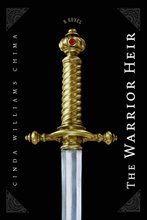
With The Warrior Heir, there was a huge controversy about roses on the cover (which I like to refer to as The War of the Roses). The question: Would boys buy a book with roses on the cover?? Even one with a big sword in the middle?

If so, what kind of roses were the most macho? These?

Or these?

In the end, the book designer made the decision to leave the roses off.

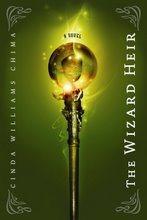
With The Wizard Heir, my editor came to me and asked, What ‘s an object we can put on the cover, you know, like the sword? And I couldn’t think of any. The wizards were using amulets, but they were mostly nondescript stones with runes on them.

Well, my editor said, could you put in a wizard staff or something? I couldn’t picture Seph McCauley walking around with a wizard staff. So I gave one to Gregory Leicester.

Did you know these things went on?

By the time I wrote The Dragon Heir, I knew enough to be thinking ahead. Dragons, I thought. Dragons were always good on a cover. So I put the Dragonheart on a cool dragon stand.

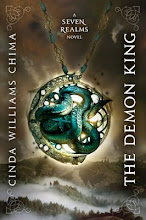
With The Demon King, the book design was tricky. As the first book in a new series, we wanted a design that would tell my current readers to pick it up, that it was a book by an author they knew. But we wanted it to be different enough that people would realize it was a new series. I want to attract new readers without disappointing fans of the Heir Chronicles.

We thought a landscape background would set it apart.

That didn't seem atmospheric enough, so

They revised the layout to be more similar to the Heir Chronicles, and added the text, A Seven Realms Novel, to let readers know they were onto a different series. I just received the proof of the final cover, all foiled and spot varnished. It’s gorgeous.

The important thing is—when a book cover makes a promise, the book must deliver. Or nobody’s happy.

Friday, July 3, 2009

When Stories Bite


As a writer, sometimes I get impatient with people who say, I want to write, but I can’t think of anything. I want to tell them to go home and take up scrapbooking. Or classical guitar.
Writing is more about craft than concept. If you’re a writer, stories are everywhere. You just have to recognize them when they bite you on the…um…toe.
Perhaps they are setting their standards too high.Imperfect stories can be compelling, too.
I like to take walks around my subdivision in the afternoons. It’s not exactly your colorful city neighborhood, peopled with diverse characters, exploding with gritty drama, but it has its moments.
Take yesterday, for example. As I walked between the manicured lawns, I saw two boys crouching on the devil strip, their attention focused on the ground. As I got closer, I saw they were corralling two half-grown chickens.
I said, just to be sure, “What are those?”
“Chickens,” one boy said, looking up over his shoulder and rolling his eyes. “This one’s a hen, that one’s a rooster.”
Chickens in the ‘burbs. “Oh,” I said. “What are they doing here?”
“Well,” the boy said, “Mostly eating, sleeping, and pooping.”
I guess that falls into the ‘ask a silly question’ category. But what I meant, was: What’s the story? Several possibilities had already popped into my head.
Later, I saw a young girl approaching me on a mini bike—a very small, motorized bike. She was gangly—almost too big for it, her long legs nearly dragging on the ground. If I had to guess, I’d say she was about eleven. She wore a camouflage shirt and pants, and what looked like a combat helmet, though maybe it was a stand-in for a bike helmet. Over her shoulder was slung a toy machine gun, the business end pointed at the sky. She buzzed past me and on up the street, a solemn, combat-weary expression on her freckled face.
There’s a story there, I’m sure of it. I just don’t know what it is.
But I can make up a dozen or more.

Wednesday, June 10, 2009

Upcoming Events Northern Ohio

Summer is here and the time is ripe for…
Author Events!

Hope to see you at one of the following events:

Northwest Akron Branch Library
Teen Writing Workshop
Tuesday, June 23, 2009, 3-5 p.m.
1720 Shatto Avenue, Akron, Ohio 44313
330-836-1081

Way Library, Perrysburg, OH
Teen Writing Workshop
Friday, June 26, 2009, 2 p.m.
101 E Indiana Ave
Perrysburg, OH 43551
419-874-3135

Wadsworth Public Library, Wadsworth, OH
Introductory Spellcasting--Writing and Publishing Young Adult Fantasy
Tuesday, July 7, 7 to 9 p.m.
132 Broad St., Wadsworth, OH 44281-1897
For more information, visit http://www.wadsworthlibrary.com/teens/index.cfm

Sunday, April 19, 2009

Teen Fantasy Writing Workshop - Tuesday 4/21 in Strongsville!


Live in Northeastern Ohio? Interested in writing fantasy? I'm teaching a fantasy writing workshop Tuesday night, April 21, 7 p.m. at the Strongsville Branch, Cuyahoga County Library. Admission is free, but registration is requested at http://www.cuyahogalibrary.org/EventDetail.aspx?EventInstanceID=28553

Saturday, April 18, 2009

Breaking the Rules of Point of View

Q: Point of view is one of those important "rules" of writing. My editor and other writers I know treat it like a cardinal sin to change perspective. My understanding is that an author writing in 3rd person maintains telling the story through the main character's eyes. I notice that you write scenes that do not involve your main character and even get inside the thoughts and emotions of secondary characters. I wonder if it was a conscious decision of yours, and if anyone discouraged you from this? 

A: Those of us who have studied craft read differently than other people. We are often thrown right out of the story when we stumble across apparent violations of the “rules” that the pleasure reader would never notice.  

   You are doing your job as a writer—you have read the rules, you have studied craft—and now you are analyzing work by other writers to see whether they are following the rules and, more importantly, what works and what doesn’t.

The advantage of being able to change viewpoints is that the writer can deliver all the action in scene and in a very direct way, and not have to resort to awkward stratagems like having one person telling another what happened when the viewpoint character was offstage.

The standard point-of-view rule is that you can use more than one POV in a novel, but only one in a scene or chapter. In other words, you can't jump from head to head within a scene, but you can go to another character's POV after you take a break.

That said, I see violations of this rule all the time, in bestselling books from popular authors.  Who do they think they are? And why don’t they have to follow the rules?

In writing commercial fiction, the final arbiter is the reading audience. Does it work, or is it distracting? Does it serve the story or interfere? Does it keep the reader at arm’s length or draw him in? Is it confusing? If readers have to stop and reread paragraphs in order to follow the story and know whose head they’re in, they are likely to put it down. 

There are other drawbacks to having multiple POVs—you want readers to connect and identify with your characters and they can't if you don't spend much time with any one. So it's best to stick to one or two viewpoints. If you introduce a new viewpoint character, it should be for a good reason.

The first two Heir Chronicles books are each primarily from one POV, with a few exceptions that enabled me to present important events onstage. The last book is more of an ensemble cast, made up of characters from the previous books, with multiple viewpoints. Some readers loved this, others complained (mostly because their favorite character wasn’t on stage long enough.)

You asked whether I had been discouraged from using multiple viewpoints. In my upcoming novel, The Demon King, the viewpoint generally alternates chapter by chapter between two main viewpoint characters—Han Alister, a streetgang leader,  and Raisa ana’Marianna, a rebellious princess. There are two chapters from the viewpoint of Amon Byrne, a cadet in the Queen’s Guard. My editor questioned whether this was necessary, since it departed from the pattern. I thought hard about it, and decided that the needs of the story were best met by using the third viewpoint. My editor agreed.  


Sunday, March 22, 2009

What Hard Work Will Get You -- Or Not


I often hear from young writers, asking for advice. I try to answer their specific questions when I can. When asked for general advice, I have a kind of standard response that would have made my mother proud. You know. Success is all about hard work, study of craft, intensive reading of work in your genre, practice practice practice, with a seasoning of talent and luck. Don’t expect overnight success, I tell them. In order to be a writer, you have to love writing so much that you will write whether you get paid or not.
I began writing when I was a teenager, and though I didn’t write regularly in early adulthood, it took five years of constant writing (and four books) to get my work to where first an agent and then a publisher took interest in it.
I’m still learning, every single day. One thing I look for in a writing conference is a focus on craft, in addition to the usual sessions on how to find an agent or how to craft a query letter.
So it was with interest that I watched an interview with Stephenie Meyer that was included with the Twilight video. Although Meyer was an English major in college, she confessed that she just wanted a major that would allow her to read books for a grade. She took only one writing course in college and moved immediately into child-rearing after graduation.
You may have heard the story that the idea for Twilight came to Meyer in a dream. She wrote Twilight in three months, working around the demands of three small children. In a twinkling (my word) she had a three-book contract. And, of course, the Twilight series went on to be the kind of phenomenon that makes publishing history and bookseller bottom lines.
Hmmm. So much for long years of study and practice. Meyer was/is a voracious reader, but that seems to have been the sum total of her preparation for greatness.
Now, there are those who criticize the quality of the writing in the Twilight series. For instance, author Stephen King outraged Twilight fans when he described Meyer’s writing as “not very good.” Others have criticized the message she sends to young women.
But then, not everyone likes Stephen King, either. I’m not comparing myself to Meyer or King, but my books have come in for their share of criticism, too, along with some awards and good reviews. From a craft standpoint, Meyer certainly did better than I did on my first, unpublished try.
You’re never going to please everyone, but Meyer has been successful by every commercial measure. I think a lot of writers out there would gladly take the heat from critics if the first novel they wrote sold in the tens of millions.
What do you think? What’s the most important driver of publishing success for authors? Talent? Hard work? Luck? Connections?